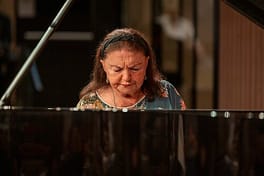
Photo: Alexander Khanin / CC BY-SA 4.0 (source: Wikimedia Commons)
Public records list Oxana Yablonskaya as a pianist, music educator and musician. Born on December 6, 1938, Oxana Yablonskaya is from Moscow, Moscow Governorate, Duchy of Moscow. The age as of 2026 is 87.
My Take
Oxana Yablonskaya commands my deepest respect. Born in Moscow in 1938, she won major Western competitions yet was forbidden by the Soviet state from accepting engagements outside the bloc, an almost unbearable cruelty for a performer at her peak. That she refused to abandon the piano, later rebuilding an international career across America and Israel while mentoring younger musicians, is a story of artistic stubbornness in the best sense. She bent neither to politics nor to circumstance. I find something genuinely moving in an artist who answered the silencing of a system with the simple, defiant insistence on continuing to play.
This take was written by generative AI, one per person, from publicly reported facts (editorial policy). It is a reading of the record, not reporting.
1. Profile
- Name (English)
- Oxana Yablonskaya
- Name (Japanese)
- オクサナ・ヤブロンスカヤ
- Reading
- おくさな・やぶろんすかや
- Born
- December 6, 1938 (age 87)
- Origin
- Moscow, Moscow Governorate, Duchy of Moscow
- Occupation
- pianist / music educator / musician
- Zodiac / Chinese zodiac
- Sagittarius / Tiger
2. Links
3. About this entry
Tags
- Last updated
Facts are limited to publicly available information up to 2024; non-public or unconfirmed items are omitted. English text is machine-assisted (facts translated by Sonnet, "My Take" written by Opus 4.8). The Japanese page is the source of record.
Frequently asked questions
When was Oxana Yablonskaya born?
Born December 6, 1938 (age 87).
Where is Oxana Yablonskaya from?
Oxana Yablonskaya is from Moscow, Moscow Governorate, Duchy of Moscow.
What does Oxana Yablonskaya do?
Oxana Yablonskaya works as pianist, music educator, musician.
Pianist — see all → · Music educator — see all → · More people from the Duchy of Moscow →