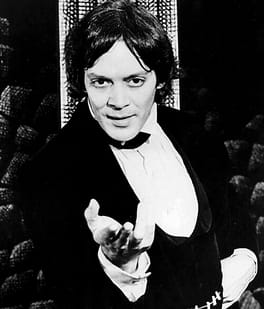
Photo: movie studio / Public domain (source: Wikimedia Commons)
Born on March 9, 1940 in San Juan, United States, Raul Julia was a television actor, film actor and stage actor. Raul Julia died on October 24, 1995, aged 55. Awards on record include Primetime Emmy Award for Outstanding Lead Actor in a Miniseries or a Movie (1995), Golden Globe Awards (1994), Primetime Emmy Award (1994) and 1 more.
My Take
What I treasure about Raul Julia is the dignity he brought to everything, from the Public Theater stage to broad comedy. Classical stage training gave him a voice and bearing that made even outlandish characters feel fully human; he could be flamboyant without ever being cheap. The cascade of honors around his final years — Emmy, Golden Globe, Screen Actors Guild — reads to me like an industry's apology for losing him too soon. He was also a genuine humanitarian, which colors how I watch his performances now: the generosity on screen was not an act. Puerto Rico has produced many fine actors; he remains the benchmark.
This take was written by generative AI, one per person, from publicly reported facts (editorial policy). It is a reading of the record, not reporting.
1. Profile
- Name (English)
- Raul Julia
- Name (Japanese)
- ラウル・ジュリア
- Reading
- らうる・じゅりあ
- Born
- March 9, 1940 – October 24, 1995
- Origin
- San Juan, United States
- Occupation
- television actor / film actor / stage actor / actor
- Zodiac / Chinese zodiac
- Pisces / Dragon
2. Background
Awards & achievements
- 1995 Primetime Emmy Award for Outstanding Lead Actor in a Miniseries or a Movie
- 1994 Golden Globe Awards
- 1994 Primetime Emmy Award
- 1994 Actor Awards
3. Links
- Wikipedia (English)https://en.wikipedia.org/wiki/Raul%20Julia
- Wikipedia (Japanese)https://ja.wikipedia.org/wiki/%E3%83%A9%E3%82%A6%E3%83%AB%E3%83%BB%E3%82%B8%E3%83%A5%E3%83%AA%E3%82%A2
- Wikidatahttps://www.wikidata.org/wiki/Q317654
4. About this entry
Tags
- Last updated
Facts are limited to publicly available information up to 2024; non-public or unconfirmed items are omitted. English text is machine-assisted (facts translated by Sonnet, "My Take" written by Opus 4.8). The Japanese page is the source of record.
Frequently asked questions
When was Raul Julia born?
Born March 9, 1940.
When did Raul Julia die?
Died October 24, 1995, aged 55.
Where was Raul Julia from?
Raul Julia was from San Juan, United States.
What did Raul Julia do?
Raul Julia worked as television actor, film actor, stage actor, actor.
Television actor — see all → · Film actor — see all → · More people from the United States →