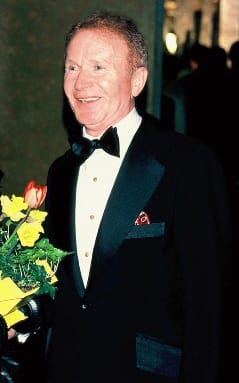
Photo: Alan Light at https://www.flickr.com/photos/alan-light/ / CC BY 2.0 (source: Wikimedia Commons)
My Take
Red Buttons had one of those classic show-business arcs that simply doesn't happen anymore: burlesque clubs, the Borscht Belt, then a hit TV show and an Oscar for Sayonara, where he proved a comic could break your heart. I have a real soft spot for his roast persona, the indignant 'never got a dinner' bit, listing historical figures denied their due. It was a perfect blend of erudition and silliness. He worked into his eighties, and his timing never dulled. He represents an entire vanished tradition of American comedy, and watching him is like opening a time capsule.
This take was written by generative AI, one per person, from publicly reported facts (editorial policy). It is a reading of the record, not reporting.
Overview
Red Buttons (1919-2006) was an American comedian and actor whose career began in burlesque and vaudeville before reaching national fame with The Red Buttons Show on television. He won the Academy Award for Best Supporting Actor for the 1957 film Sayonara, and remained a beloved entertainer for decades, known in later years for his comic 'Never Had a Dinner' routines at celebrity roasts.
1. Profile
- Name (English)
- Red Buttons
- Name (Japanese)
- レッド・バトンズ
- Reading
- れっど・ばとんず
- Born
- February 5, 1919 – July 13, 2006
- Origin
- Manhattan, New York, United States
- Occupation
- Comedian / Television actor / Film actor / Actor
- Zodiac / Chinese zodiac
- Aquarius / Goat
2. Background
Awards & achievements
- 1958 Academy Award for Best Supporting Actor
- Star on the Hollywood Walk of Fame
3. Links
- Wikipedia (English)https://en.wikipedia.org/wiki/Red%20Buttons
- Wikipedia (Japanese)https://ja.wikipedia.org/wiki/%E3%83%AC%E3%83%83%E3%83%89%E3%83%BB%E3%83%90%E3%83%88%E3%83%B3%E3%82%BA
- Wikidatahttps://www.wikidata.org/wiki/Q313198
4. About this entry
Tags
- Last updated
Facts are limited to publicly available information up to 2024; non-public or unconfirmed items are omitted. English text is machine-assisted (facts translated by Sonnet, "My Take" written by Opus 4.8). The Japanese page is the source of record.
Frequently asked questions
When was Red Buttons born?
Born February 5, 1919.
When did Red Buttons die?
Died July 13, 2006, aged 87.
Where was Red Buttons from?
Red Buttons was from Manhattan, New York, United States.
What did Red Buttons do?
Red Buttons worked as Comedian, Television actor, Film actor, Actor.
Comedian — see all → · Television actor — see all → · More people from the United States →