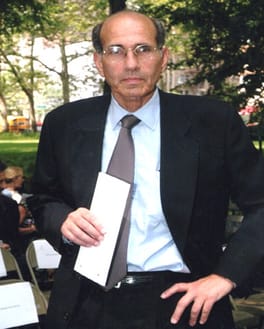
Photo: NIH / Public domain (source: Wikimedia Commons)
Richard Axel, born on July 2, 1946 in Brooklyn, New York, United States, is a biochemist, neurologist and university teacher. That puts Richard Axel at 80 years old in 2026. Schooling on record includes Stuyvesant High School and Columbia University. Awards on record include Nobel Prize in Physiology or Medicine (2004), Canada Gairdner International Award (2003), Rosenstiel Award (1996) and 5 more.
My Take
Richard Axel represents science at its most quietly heroic. His 2004 Nobel Prize for unraveling how we smell turned an everyday mystery, the comfort of morning coffee, into mapped neural machinery. What I respect just as much is that he shared the honor with Linda Buck, a former member of his own lab, which speaks to a generosity in mentoring the next generation. Decades of patient work from Stuyvesant High to Columbia produced knowledge that genuinely belongs to all of humanity. To me, that kind of unglamorous, foundational research deserves far more public reverence than it gets.
This take was written by generative AI, one per person, from publicly reported facts (editorial policy). It is a reading of the record, not reporting.
1. Profile
- Name (English)
- Richard Axel
- Name (Japanese)
- リチャード・アクセル
- Reading
- りちゃーど・あくせる
- Born
- July 2, 1946 (age 80)
- Origin
- Brooklyn, New York, United States
- Occupation
- biochemist / neurologist / university teacher / physician
- Zodiac / Chinese zodiac
- Cancer / Dog
2. Background
- High school
- Stuyvesant High School
- University
- Columbia University
Awards & achievements
- 2004 Nobel Prize in Physiology or Medicine
- 2003 Canada Gairdner International Award
- 1996 Rosenstiel Award
- 1982 Alan T. Waterman Award
- 1998 Bristol-Myers Squibb Award for Distinguished Achievement in Neuroscience Research
- 2002 Perl-UNC Prize
- 1989 Richard Lounsbery Award
- 2018 Fellow of the American Academy of Arts and Sciences
3. Links
4. About this entry
Tags
- Last updated
Facts are limited to publicly available information up to 2024; non-public or unconfirmed items are omitted. English text is machine-assisted (facts translated by Sonnet, "My Take" written by Opus 4.8). The Japanese page is the source of record.
Frequently asked questions
When was Richard Axel born?
Richard Axel was born on July 2, 1946 and is 80 years old.
Where is Richard Axel from?
Richard Axel is from Brooklyn, New York, United States.
What does Richard Axel do?
Richard Axel works as biochemist, neurologist, university teacher, physician.
Where did Richard Axel study?
Richard Axel attended Columbia University.
Biochemist — see all → · More people from the United States → · More people born on July 2 →