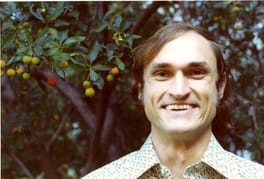
Photo: George Bergman / GFDL 1.2 (source: Wikimedia Commons)
Born on October 23, 1950 in Fort Recovery, Ohio, United States, Richard Schoen is a mathematician, university teacher and academic. As of 2026, Richard Schoen is 75 years old. Schooling on record includes Stanford University. Awards on record include Guggenheim Fellowship, MacArthur Fellows Program (1983), Wolf Prize in Mathematics (2017) and 3 more.
My Take
Schoen is the kind of figure I find quietly magnetic: a man from tiny Fort Recovery, Ohio, who reshaped how we understand curved space. I confess the technical depth of the Yamabe problem is beyond me, but the roster of honors he holds, the MacArthur, the Wolf Prize, the Guggenheim, tells me everything. These aren't popularity contests; they're the verdict of the sharpest minds alive. What moves me is the contrast between his global stature and his utter invisibility to the public. He chose chalk dust over spotlight, and to me that restraint is its own form of greatness worth saluting.
This take was written by generative AI, one per person, from publicly reported facts (editorial policy). It is a reading of the record, not reporting.
1. Profile
- Name (English)
- Richard Schoen
- Name (Japanese)
- リチャード・シェーン
- Reading
- りちゃーど・しぇーん
- Born
- October 23, 1950 (age 75)
- Origin
- Fort Recovery, Ohio, United States
- Occupation
- mathematician / university teacher / academic
- Zodiac / Chinese zodiac
- Libra / Tiger
2. Background
- University
- Stanford University
Awards & achievements
- Guggenheim Fellowship
- 1983 MacArthur Fellows Program
- 2017 Wolf Prize in Mathematics
- 1989 Bôcher Memorial Prize
- Fellow of the American Academy of Arts and Sciences
- 2013 Fellow of the American Mathematical Society
3. Links
- Official sitehttps://profiles.stanford.edu/richard-schoen
- Wikipedia (English)https://en.wikipedia.org/wiki/Richard%20Schoen
- Wikipedia (Japanese)https://ja.wikipedia.org/wiki/%E3%83%AA%E3%83%81%E3%83%A3%E3%83%BC%E3%83%89%E3%83%BB%E3%82%B7%E3%82%A7%E3%83%BC%E3%83%B3
- Wikidatahttps://www.wikidata.org/wiki/Q455610
4. About this entry
Tags
- Last updated
Facts are limited to publicly available information up to 2024; non-public or unconfirmed items are omitted. English text is machine-assisted (facts translated by Sonnet, "My Take" written by Opus 4.8). The Japanese page is the source of record.
Frequently asked questions
When was Richard Schoen born?
Born October 23, 1950 (age 75).
Where is Richard Schoen from?
Richard Schoen is from Fort Recovery, Ohio, United States.
What does Richard Schoen do?
Richard Schoen works as mathematician, university teacher, academic.
Mathematician — see all → · University teacher — see all → · More people from the United States →