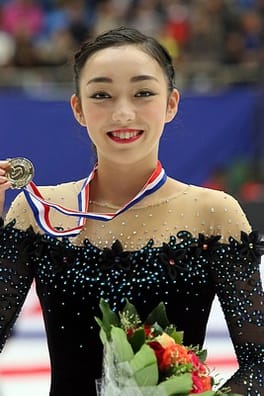
Photo: David W. Carmichael / CC BY-SA 3.0 (source: Wikimedia Commons)
My Take
Rika Hongo is one of those skaters who quietly impressed me more than the headlines suggested. She came out of Sendai, trained through the incredibly deep pool of Japanese ladies skating, and still managed to hold her own on the Grand Prix circuit — winning the Rostelecom Cup in 2014 was no small thing. Two Four Continents bronze medals back-to-back in 2015 and 2016 says she could show up and deliver when it mattered. She never quite cracked the top tier at Worlds, but sixth place in 2015 in a field that competitive is genuinely respectable. What I always appreciated was the range in her program choices — Carmen, Carmina Burana, she wasn't afraid of big, dramatic material. She retired in 2021, made a fun appearance in One Piece on Ice in 2023, and honestly left at a dignified moment. Not every skater gets a clean exit like that.
This take was written by generative AI, one per person, from publicly reported facts (editorial policy). It is a reading of the record, not reporting.
Overview
Rika Hongo is a retired Japanese figure skater born on September 6, 1996, in Sendai, Miyagi Prefecture. She attended Chukyo University and competed as a senior-level skater representing Japan. She won the 2014 Rostelecom Cup and two Four Continents bronze medals (2015, 2016) before retiring in 2021.
1. Profile
- Name (English)
- Rika Hongo
- Name (Japanese)
- 本郷理華
- Reading
- ほんごう りか
- Born
- September 6, 1996 (age 30)
- Origin
- Sendai, Miyagi Prefecture, Japan
- Occupation
- Figure skater
- Zodiac / Chinese zodiac
- Virgo / Rat
2. Background
- University
- Chukyo University
3. Links
- Instagramhttps://www.instagram.com/rika_hongo/
- Wikipedia (Japanese)https://ja.wikipedia.org/wiki/%E6%9C%AC%E9%83%B7%E7%90%86%E8%8F%AF
- Wikidatahttps://www.wikidata.org/wiki/Q7333998
4. About this entry
Tags
- Last updated
Only publicly available facts are listed; non-public or unconfirmed items are omitted. Base data was compiled from Wikidata from June 2026 onward; ages are recalculated daily and deaths are checked against Wikidata on an ongoing basis. English text is machine-assisted (facts translated by Sonnet, "My Take" written by Opus 4.8). The Japanese page is the source of record.
Frequently asked questions
When was Rika Hongo born?
Rika Hongo was born on September 6, 1996 and is 30 years old.
Where is Rika Hongo from?
Rika Hongo is from Sendai, Miyagi Prefecture, Japan.
What does Rika Hongo do?
Rika Hongo works as Figure skater.
Where did Rika Hongo study?
Rika Hongo attended Chukyo University.
Figure skater — see all → · More people from Japan → · More people born on September 6 →