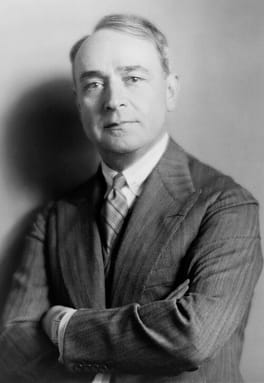
Photo: Bain News Service photo (John Garo) / Public domain (source: Wikimedia Commons)
My Take
Koussevitzky is one of those figures whose fingerprints are all over twentieth-century music even if casual listeners have never heard his name. The man basically willed modern American classical music into existence through sheer commissioning power, bankrolling Copland, Bartok's Concerto for Orchestra, Britten's Peter Grimes, and so much more. What gets me is that he started as a double-bass player, an instrument almost no one solos on, and ended up running the Boston Symphony for twenty-five years. Founding Tanglewood and mentoring a young Leonard Bernstein cemented his legacy. He didn't just conduct music, he shaped which music got written at all.
This take was written by generative AI, one per person, from publicly reported facts (editorial policy). It is a reading of the record, not reporting.
Overview
Serge Koussevitzky (July 26, 1874 - June 4, 1951) was a Russian-born conductor, composer, and double-bass virtuoso who became one of the most influential conductors of the twentieth century. He served as music director of the Boston Symphony Orchestra from 1924 to 1949 and founded the Tanglewood Music Center. A tireless champion of new music, he commissioned and premiered works by composers including Bartok, Copland, Britten, and Stravinsky, and his foundation continues to commission new compositions today.
1. Profile
- Name (English)
- Serge Koussevitzky
- Name (Japanese)
- セルゲイ・クーセヴィツキー
- Reading
- せるげい・くーせゔぃつきー
- Born
- July 26, 1874 – June 4, 1951
- Origin
- Vyshny Volochyok, Tver Oblast, Russia
- Occupation
- Composer / Conductor / Musician / Music Educator
- Zodiac / Chinese zodiac
- Leo / Dog
2. Links
3. About this entry
Tags
- Last updated
Facts are limited to publicly available information up to 2024; non-public or unconfirmed items are omitted. English text is machine-assisted (facts translated by Sonnet, "My Take" written by Opus 4.8). The Japanese page is the source of record.
Frequently asked questions
When was Serge Koussevitzky born?
Born July 26, 1874.
When did Serge Koussevitzky die?
Died June 4, 1951, aged 76.
Where was Serge Koussevitzky from?
Serge Koussevitzky was from Vyshny Volochyok, Tver Oblast, Russia.
What did Serge Koussevitzky do?
Serge Koussevitzky worked as Composer, Conductor, Musician, Music Educator.
Composer — see all → · Conductor — see all → · More people from Russia →