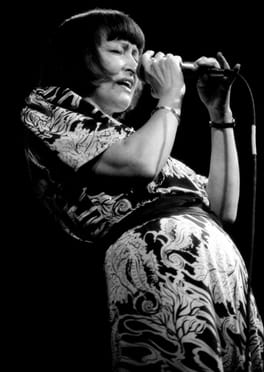
Photo: Brianmcmillen / CC BY-SA 3.0 (source: Wikimedia Commons)
Sheila Jordan was born on November 18, 1928 in Detroit, Michigan, United States and was credited as a jazz singer, singer-songwriter and recording artist. Awards on record include NEA Jazz Masters.
My Take
What strikes me about Sheila Jordan is how stubbornly singular her path was. Pairing her voice with nothing but an upright bass is a wildly exposed way to sing jazz, and she leaned into that vulnerability instead of hiding behind a band. I find it telling that the NEA recognized her as a Jazz Master, because she was as much a teacher and keeper of the bebop tradition as a performer. Living to 96 while still championing scat and improvisation says something about her conviction. To me she represents the artist who chases the music itself, not the spotlight, and earns lasting respect for it.
This take was written by generative AI, one per person, from publicly reported facts (editorial policy). It is a reading of the record, not reporting.
1. Profile
- Name (English)
- Sheila Jordan
- Name (Japanese)
- シーラ・ジョーダン
- Reading
- しーら・じょーだん
- Born
- November 18, 1928
- Origin
- Detroit, Michigan, United States
- Occupation
- jazz singer / singer-songwriter / recording artist / music educator / singer
- Zodiac / Chinese zodiac
- Scorpio / Dragon
2. Background
Awards & achievements
- NEA Jazz Masters
3. Links
- Official sitehttps://www.sheilajordanjazz.com/
- Wikipedia (English)https://en.wikipedia.org/wiki/Sheila%20Jordan
- Wikipedia (Japanese)https://ja.wikipedia.org/wiki/%E3%82%B7%E3%83%BC%E3%83%A9%E3%83%BB%E3%82%B8%E3%83%A7%E3%83%BC%E3%83%80%E3%83%B3
- Wikidatahttps://www.wikidata.org/wiki/Q459052
4. About this entry
Tags
- Last updated
Facts are limited to publicly available information up to 2024; non-public or unconfirmed items are omitted. English text is machine-assisted (facts translated by Sonnet, "My Take" written by Opus 4.8). The Japanese page is the source of record.
Frequently asked questions
When was Sheila Jordan born?
Born November 18, 1928.
Where was Sheila Jordan from?
Sheila Jordan was from Detroit, Michigan, United States.
What did Sheila Jordan do?
Sheila Jordan worked as jazz singer, singer-songwriter, recording artist, music educator, singer.
Singer-songwriter — see all → · More people from the United States →