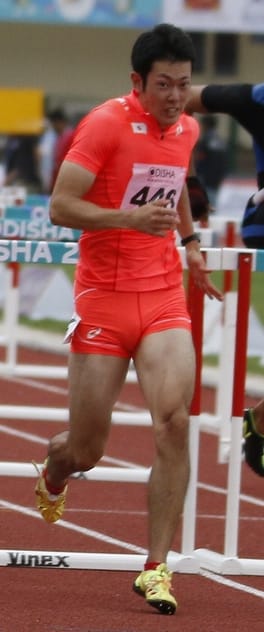
Photo: Athletics Federation of India / CC BY-SA 4.0 (source: Wikimedia Commons)
My Take
Shunya Takayama is the kind of athlete I genuinely respect but rarely hear talked about at parties — a track and field guy from Hiroshima who made his way to Meiji University in Tokyo to chase records on the oval, not headlines. And honestly, that fits. Distance running and sprinting are brutally honest sports — no teammates to bail you out, no flashy plays, just you and the clock. The fact that details about his personal life are almost entirely private feels very on-brand for someone whose whole world is probably splits, form drills, and the next race. I don't know his best times off the top of my head, but the dedication it takes to leave a city like Hiroshima, grind through a university athletics program, and keep competing tells me everything I need to know about his character.
This take was written by generative AI, one per person, from publicly reported facts (editorial policy). It is a reading of the record, not reporting.
Overview
Shunya Takayama is a Japanese track and field athlete born on September 3, 1994, in Hiroshima Prefecture. He attended Meiji University, where he pursued athletics. Details about his career period, agency, and personal life remain private or unknown.
1. Profile
- Name (English)
- Shunya Takayama
- Name (Japanese)
- 高山峻野
- Reading
- たかやま しゅんや
- Born
- September 3, 1994 (age 32)
- Origin
- Hiroshima Prefecture, Japan
- Occupation
- Track and field athlete
- Zodiac / Chinese zodiac
- Virgo / Dog
2. Background
- University
- Meiji University
3. Links
4. About this entry
Tags
- Last updated
Facts are limited to publicly available information up to 2024; non-public or unconfirmed items are omitted. English text is machine-assisted (facts translated by Sonnet, "My Take" written by Opus 4.8). The Japanese page is the source of record.
Frequently asked questions
When was Shunya Takayama born?
Born September 3, 1994 (age 32).
Where is Shunya Takayama from?
Shunya Takayama is from Hiroshima Prefecture, Japan.
What does Shunya Takayama do?
Shunya Takayama works as Track and field athlete.
Track and field athlete — see all → · More people from Japan →