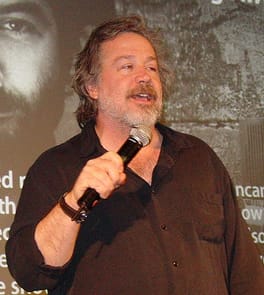
Photo: BJ Barratt / CC BY-SA 2.0 (source: Wikimedia Commons)
Tom Hulce was born on December 6, 1953 in Detroit, Michigan, United States. Public records list Tom Hulce as a film producer, singer and voice actor. The age as of 2026 is 72. Schooling on record includes University of North Carolina School of the Arts. Listed accolades include Primetime Emmy Award for Outstanding Supporting Actor in a Miniseries or a Movie (1996).
My Take
Tom Hulce is one of those actors who delivered one of cinema's most electrifying performances and then seemingly walked away from fame without much fuss — and honestly, I find that kind of fascinating. His Mozart in Amadeus (1984) is flat-out one of the greatest screen performances I've ever seen: that giggling, mercurial genius who's simultaneously insufferable and heartbreaking. He trained seriously at the University of North Carolina School of the Arts, which explains why the performance feels so technically grounded beneath all that wild energy. Before Amadeus he was charming in Animal House, and he later voiced Quasimodo in The Hunchback of Notre Dame with real emotional weight. He won a Primetime Emmy in 1996 for supporting work in a miniseries, which tracks — the guy can do anything. That he largely pivoted to theater producing rather than chasing Hollywood stardom says something quietly admirable about his priorities.
This take was written by generative AI, one per person, from publicly reported facts (editorial policy). It is a reading of the record, not reporting.
1. Profile
- Name (English)
- Tom Hulce
- Name (Japanese)
- トム・ハルス
- Reading
- とむ・はるす
- Born
- December 6, 1953 (age 72)
- Origin
- Detroit, Michigan, United States
- Occupation
- film producer / singer / voice actor / stage actor / film actor
- Zodiac / Chinese zodiac
- Sagittarius / Snake
2. Background
- University
- University of North Carolina School of the Arts
Awards & achievements
- 1996 Primetime Emmy Award for Outstanding Supporting Actor in a Miniseries or a Movie
3. Links
- Wikipedia (English)https://en.wikipedia.org/wiki/Tom%20Hulce
- Wikipedia (Japanese)https://ja.wikipedia.org/wiki/%E3%83%88%E3%83%A0%E3%83%BB%E3%83%8F%E3%83%AB%E3%82%B9
- Wikidatahttps://www.wikidata.org/wiki/Q315039
4. About this entry
Tags
- Last updated
Only publicly available facts are listed; non-public or unconfirmed items are omitted. Base data was compiled from Wikidata from June 2026 onward; ages are recalculated daily and deaths are checked against Wikidata on an ongoing basis. English text is machine-assisted (facts translated by Sonnet, "My Take" written by Opus 4.8). The Japanese page is the source of record.
Frequently asked questions
When was Tom Hulce born?
Tom Hulce was born on December 6, 1953 and is 72 years old.
Where is Tom Hulce from?
Tom Hulce is from Detroit, Michigan, United States.
What does Tom Hulce do?
Tom Hulce works as film producer, singer, voice actor, stage actor, film actor.
Where did Tom Hulce study?
Tom Hulce attended University of North Carolina School of the Arts.
Film producer — see all → · Singer — see all → · More people from the United States → · More people born on December 6 →