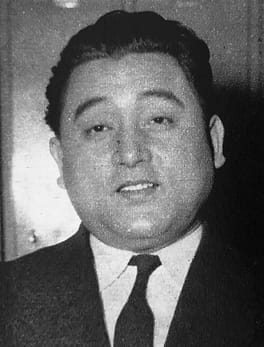
Photo: 産業経済新聞社(Sankei Shinbun Co., Ltd.) / Public domain (source: Wikimedia Commons)
My Take
Toshiyuki Ichimura is the kind of old-school Showa entertainer who just quietly did everything — acting, voice work, comedy — without making a big deal about it, which I find genuinely impressive. Born in Tokyo in 1920, he came up in an era when you couldn't afford to be a one-trick performer, and it shows: the guy had range. I love that triple-threat combination of making audiences laugh, convincing them with a dramatic scene, and then lending that voice to something else entirely. It's a reminder that the category lines we draw now — "actor," "comedian," "voice actor" — are pretty recent inventions. He passed at 62 in 1983, which feels too soon, but what I keep thinking is that anyone who could hold a Showa audience across that many formats clearly had something real going on under the surface. Worth digging into.
This take was written by generative AI, one per person, from publicly reported facts (editorial policy). It is a reading of the record, not reporting.
Overview
Toshiyuki Ichimura (1920–1983) was a Japanese actor, voice actor, and comedian born in Tokyo. Active during the Showa era, he worked across stage and screen performance as well as voice work, demonstrating a notably broad range of entertainment skills. He died on August 9, 1983, at the age of 62.
1. Profile
- Name (English)
- Toshiyuki Ichimura
- Name (Japanese)
- 市村俊幸
- Reading
- いちむら としゆき
- Born
- December 20, 1920 – August 9, 1983
- Origin
- Tokyo, Japan
- Occupation
- Actor / Voice Actor / Comedian
- Zodiac / Chinese zodiac
- Sagittarius / Monkey
2. Links
- Wikipedia (Japanese)https://ja.wikipedia.org/wiki/%E5%B8%82%E6%9D%91%E4%BF%8A%E5%B9%B8
- Wikidatahttps://www.wikidata.org/wiki/Q11480491
3. About this entry
Tags
- Last updated
Only publicly available facts are listed; non-public or unconfirmed items are omitted. Base data was compiled from Wikidata from June 2026 onward; ages are recalculated daily and deaths are checked against Wikidata on an ongoing basis. English text is machine-assisted (facts translated by Sonnet, "My Take" written by Opus 4.8). The Japanese page is the source of record.
Frequently asked questions
When was Toshiyuki Ichimura born?
Toshiyuki Ichimura was born on December 20, 1920.
When did Toshiyuki Ichimura die?
Toshiyuki Ichimura died on August 9, 1983, aged 62.
Where was Toshiyuki Ichimura from?
Toshiyuki Ichimura was from Tokyo, Japan.
What did Toshiyuki Ichimura do?
Toshiyuki Ichimura worked as Actor, Voice Actor, Comedian.
Actor — see all → · Voice Actor — see all → · More people from Japan → · More people born on December 20 →