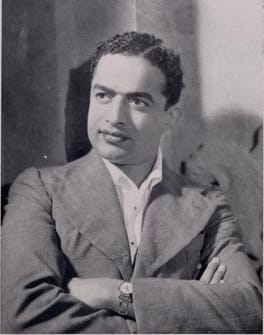
Photo: Unknown author / Public domain (source: Wikimedia Commons)
V. Shantaram, born on November 18, 1901 in Kolhapur State, British Raj, was a film director, film producer and screenwriter. V. Shantaram died on October 30, 1990, aged 88. Schooling on record includes Private High School Kolhapur. Awards on record include Filmfare Award for Best Director (1957), Dadasaheb Phalke Award and Padma Vibhushan.
My Take
V. Shantaram is one of those foundational figures whose influence dwarfs his name recognition outside India. Working from the silent era onward as director, producer, writer and actor, he helped build an entire national cinema before the templates existed. What impresses me most is his refusal to choose between art and social conscience; he pursued both when neither was easy. The Dadasaheb Phalke Award and Padma Vibhushan only confirm what his nearly nine decades of life already proved. I regard him less as a filmmaker and more as an architect of Indian film itself, and that earns my deep respect.
This take was written by generative AI, one per person, from publicly reported facts (editorial policy). It is a reading of the record, not reporting.
1. Profile
- Name (English)
- V. Shantaram
- Name (Japanese)
- V・シャンタラム
- Reading
- V・しゃんたらむ
- Born
- November 18, 1901 – October 30, 1990
- Origin
- Kolhapur State, British Raj
- Occupation
- film director / film producer / screenwriter / film actor / actor
- Zodiac / Chinese zodiac
- Scorpio / Ox
2. Background
- High school
- Private High School Kolhapur
Awards & achievements
- 1957 Filmfare Award for Best Director
- Dadasaheb Phalke Award
- Padma Vibhushan
3. Links
- Wikipedia (English)https://en.wikipedia.org/wiki/V.%20Shantaram
- Wikidatahttps://www.wikidata.org/wiki/Q1373408
4. About this entry
Tags
- Last updated
Facts are limited to publicly available information up to 2024; non-public or unconfirmed items are omitted. English text is machine-assisted (facts translated by Sonnet, "My Take" written by Opus 4.8). The Japanese page is the source of record.
Frequently asked questions
When was V. Shantaram born?
V. Shantaram was born on November 18, 1901.
When did V. Shantaram die?
V. Shantaram died on October 30, 1990, aged 88.
Where was V. Shantaram from?
V. Shantaram was from Kolhapur State, British Raj.
What did V. Shantaram do?
V. Shantaram worked as film director, film producer, screenwriter, film actor, actor.
Film director — see all → · Film producer — see all → · More people born on November 18 →