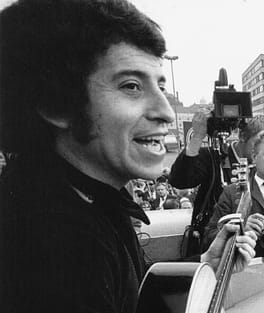
Photo: Hannu Lindroos / Lehtikuva / Public domain (source: Wikimedia Commons)
Born on September 28, 1932 in San Ignacio, Ñuble Province, Chile, Víctor Jara was a politician, librettist and teacher. Víctor Jara died on September 16, 1973 at the age of 40. Schooling on record includes University of Chile.
My Take
Víctor Jara is, to me, proof that a song can outlast a regime. A teacher, theater director, poet and singer-songwriter from rural Chile, he poured his whole self into giving the powerless a voice. His murder in 1973 during the coup is one of the darkest moments in cultural history, yet I am struck by how his music keeps spreading rather than fading. I admire artists who refuse to separate beauty from conscience, and Jara embodied that fusion completely. His guitar was silenced, but his melodies still travel the world, which I find quietly defiant and deeply human.
This take was written by generative AI, one per person, from publicly reported facts (editorial policy). It is a reading of the record, not reporting.
1. Profile
- Name (English)
- Víctor Jara
- Name (Japanese)
- ビクトル・ハラ
- Reading
- びくとる・はら
- Born
- September 28, 1932 – September 16, 1973
- Origin
- San Ignacio, Ñuble Province, Chile
- Occupation
- politician / librettist / teacher / singer-songwriter / writer
- Zodiac / Chinese zodiac
- Libra / Monkey
2. Background
- University
- University of Chile
3. Links
- Official sitehttps://www.fundacionvictorjara.org/
- Wikipedia (English)https://en.wikipedia.org/wiki/V%C3%ADctor%20Jara
- Wikipedia (Japanese)https://ja.wikipedia.org/wiki/%E3%83%93%E3%82%AF%E3%83%88%E3%83%AB%E3%83%BB%E3%83%8F%E3%83%A9
- Wikidatahttps://www.wikidata.org/wiki/Q125133
4. About this entry
Tags
- Last updated
Facts are limited to publicly available information up to 2024; non-public or unconfirmed items are omitted. English text is machine-assisted (facts translated by Sonnet, "My Take" written by Opus 4.8). The Japanese page is the source of record.
Frequently asked questions
When was Víctor Jara born?
Víctor Jara was born on September 28, 1932.
When did Víctor Jara die?
Víctor Jara died on September 16, 1973, aged 40.
Where was Víctor Jara from?
Víctor Jara was from San Ignacio, Ñuble Province, Chile.
What did Víctor Jara do?
Víctor Jara worked as politician, librettist, teacher, singer-songwriter, writer.
Where did Víctor Jara study?
Víctor Jara attended University of Chile.
Politician — see all → · Librettist — see all → · More people from Chile → · More people born on September 28 →