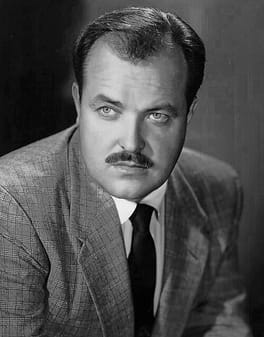
Photo: CBS Radio / Public domain (source: Wikimedia Commons)
Public records list William Conrad as a television director, film director and film actor. Born on September 27, 1920, William Conrad was from Louisville, Kentucky, United States. Death is recorded on February 11, 1994, at the age of 73. Schooling on record includes Excelsior High School.
My Take
William Conrad is one of those performers I admire precisely because he refused to be boxed in. That unmistakable booming voice could have made him a one-note radio star, yet he kept reinventing himself across five decades, moving from menacing film-noir heavies into producing and directing. A fighter pilot in World War II before Hollywood, he carried a certain gravity into every role. I respect artists who build a career on craft and stamina rather than glamour, and Conrad strikes me as exactly that kind of durable, no-nonsense professional whose work outlasted the fads around him.
This take was written by generative AI, one per person, from publicly reported facts (editorial policy). It is a reading of the record, not reporting.
1. Profile
- Name (English)
- William Conrad
- Name (Japanese)
- ウィリアム・コンラッド
- Reading
- うぃりあむ・こんらっど
- Born
- September 27, 1920 – February 11, 1994
- Origin
- Louisville, Kentucky, United States
- Occupation
- television director / actor / film director / film actor / television actor
- Zodiac / Chinese zodiac
- Libra / Monkey
2. Background
- High school
- Excelsior High School
3. Links
4. About this entry
Tags
- Last updated
Facts are limited to publicly available information up to 2024; non-public or unconfirmed items are omitted. English text is machine-assisted (facts translated by Sonnet, "My Take" written by Opus 4.8). The Japanese page is the source of record.
Frequently asked questions
When was William Conrad born?
Born September 27, 1920.
When did William Conrad die?
Died February 11, 1994, aged 73.
Where was William Conrad from?
William Conrad was from Louisville, Kentucky, United States.
What did William Conrad do?
William Conrad worked as television director, actor, film director, film actor, television actor.
Television director — see all → · Actor — see all → · More people from the United States →