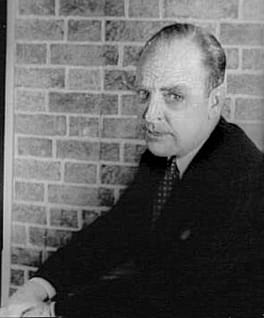
Photo: Carl Van Vechten / Public domain (source: Wikimedia Commons)
William Inge was a playwright, novelist and screenwriter. William Inge was born on May 3, 1913 in Independence, Kansas, United States. Death is recorded on June 10, 1973, at the age of 60. Schooling on record includes University of Kansas. Listed accolades include Pulitzer Prize for Drama (1953), Academy Award for Best Writing, Original Screenplay (1962) and star on Playwrights' Sidewalk.
My Take
I have a soft spot for William Inge precisely because he aimed small and hit deep. The label Playwright of the Midwest could read as faint praise, but I think it names his gift: he found the loneliness and thwarted desire inside ordinary small-town lives and made it stage-worthy. Winning both the Pulitzer for Drama in 1953 and an Academy Award for screenwriting in 1962 proves he could move between theatre and film without losing that intimacy. His own later struggles cast a sad shadow over the work. For me, his real legacy is empathy for people the spotlight usually skips.
This take was written by generative AI, one per person, from publicly reported facts (editorial policy). It is a reading of the record, not reporting.
1. Profile
- Name (English)
- William Inge
- Name (Japanese)
- ウィリアム・インジ
- Reading
- うぃりあむ・いんじ
- Born
- May 3, 1913 – June 10, 1973
- Origin
- Independence, Kansas, United States
- Occupation
- playwright / novelist / screenwriter / writer / television actor
- Zodiac / Chinese zodiac
- Taurus / Ox
2. Background
- University
- University of Kansas
Awards & achievements
- 1953 Pulitzer Prize for Drama
- 1962 Academy Award for Best Writing, Original Screenplay
- star on Playwrights' Sidewalk
3. Links
4. About this entry
Tags
- Last updated
Facts are limited to publicly available information up to 2024; non-public or unconfirmed items are omitted. English text is machine-assisted (facts translated by Sonnet, "My Take" written by Opus 4.8). The Japanese page is the source of record.
Frequently asked questions
When was William Inge born?
Born May 3, 1913.
When did William Inge die?
Died June 10, 1973, aged 60.
Where was William Inge from?
William Inge was from Independence, Kansas, United States.
What did William Inge do?
William Inge worked as playwright, novelist, screenwriter, writer, television actor.
Playwright — see all → · Novelist — see all → · More people from the United States →