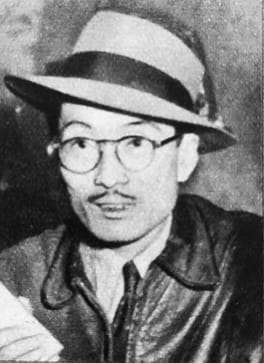
Photo: 産業経済新聞社(Sankei Shinbun Co., Ltd.) / Public domain (source: Wikimedia Commons)
My Take
Yasuki Chiba is one of those figures who quietly underpins everything you love about classic Japanese cinema without ever getting the name recognition he deserves in the West. Born in 1910, he lived through the whole arc of it — silent film, the talkie transition, wartime production constraints, postwar reconstruction, the golden age of the studio system — and he did it pulling double duty as both director and screenwriter, which tells you a lot. That's a rare combo that usually signals someone who cares deeply about the full picture, not just the visuals. He passed away in 1985, so he got 75 years and watched Japanese film transform completely around him. I'd genuinely love to dig into his actual filmography because the historical context alone makes it fascinating, and his move from a censored prewar social drama to postwar box-office hits captures an era when craftsmen just worked, quietly, and let the films speak.
This take was written by generative AI, one per person, from publicly reported facts (editorial policy). It is a reading of the record, not reporting.
Overview
Yasuki Chiba (June 24, 1910 – September 18, 1985) was a Japanese film director and screenwriter, born in Changchun, Manchuria, who worked through the Showa era of Japanese cinema. He debuted as a director in 1930, directed the first Japanese film with an on-screen kiss in 1947, launched Toho's "President" comedy series, and retired from directing in 1969. He passed away on September 18, 1985, at the age of 75.
1. Profile
- Name (English)
- Yasuki Chiba
- Name (Japanese)
- 千葉泰樹
- Reading
- ちば やすき
- Born
- June 24, 1910 – September 18, 1985
- Origin
- Changchun, People's Republic of China
- Occupation
- Film Director / Screenwriter
- Zodiac / Chinese zodiac
- Cancer / Dog
2. Links
- Wikipedia (Japanese)https://ja.wikipedia.org/wiki/%E5%8D%83%E8%91%89%E6%B3%B0%E6%A8%B9
- Wikidatahttps://www.wikidata.org/wiki/Q11406101
3. About this entry
Tags
- Last updated
Only publicly available facts are listed; non-public or unconfirmed items are omitted. Base data was compiled from Wikidata from June 2026 onward; ages are recalculated daily and deaths are checked against Wikidata on an ongoing basis. English text is machine-assisted (facts translated by Sonnet, "My Take" written by Opus 4.8). The Japanese page is the source of record.
Frequently asked questions
When was Yasuki Chiba born?
Yasuki Chiba was born on June 24, 1910.
When did Yasuki Chiba die?
Yasuki Chiba died on September 18, 1985, aged 75.
Where was Yasuki Chiba from?
Yasuki Chiba was from Changchun, People's Republic of China.
What did Yasuki Chiba do?
Yasuki Chiba worked as Film Director, Screenwriter.
Film Director — see all → · Screenwriter — see all → · More people from the People's Republic of China → · More people born on June 24 →