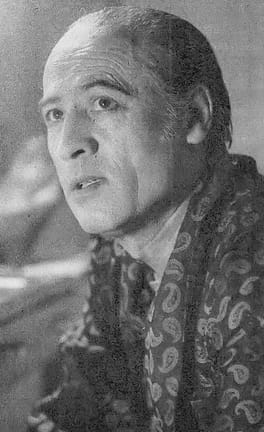
Photo: Kiyoshi Ishii / Public domain (source: Wikimedia Commons)
My Take
Yoshie Fujiwara is the kind of figure who makes you stop and think about what it actually took to do what he did. Born in Osaka in 1898, he became one of Japan's pioneering opera singers at a time when Western classical vocal music was still a novelty to most Japanese audiences — this wasn't a path anyone had mapped out for you, you were genuinely making it up as you went. There's something quietly audacious about a kid from Osaka deciding that opera, of all things, was his calling, and then actually pulling it off on stage. He lived all the way to 1976, which means he got to see Japan's classical music world grow into something real and serious, and he had no small part in making that happen. I find myself genuinely respectful of pioneers like this — they don't get the same flashy legacy as pop stars, but the culture owes them.
This take was written by generative AI, one per person, from publicly reported facts (editorial policy). It is a reading of the record, not reporting.
Overview
Yoshie Fujiwara (1898–1976) was a Japanese opera singer born in Osaka City, Osaka Prefecture. He studied at Meiji Gakuin High School and pursued a career in Western classical vocal music at a time when opera was still a rare and unfamiliar art form in Japan. He is regarded as a pioneering figure who helped introduce and establish operatic performance in the country. He passed away in 1976.
1. Profile
- Name (English)
- Yoshie Fujiwara
- Name (Japanese)
- 藤原義江
- Reading
- ふじわら よしえ
- Born
- 1898 – January 1, 1976
- Origin
- Osaka City, Osaka Prefecture, Japan
- Occupation
- Opera Singer
- Zodiac / Chinese zodiac
- Dog
2. Background
- High school
- Meiji Gakuin High School
3. Relationships
- Spouse
- 藤原あき
4. Links
- Wikipedia (Japanese)https://ja.wikipedia.org/wiki/%E8%97%A4%E5%8E%9F%E7%BE%A9%E6%B1%9F
- Wikidatahttps://www.wikidata.org/wiki/Q2790984
5. About this entry
Tags
- Last updated
Facts are limited to publicly available information up to 2024; non-public or unconfirmed items are omitted. Works and profile fields sourced from Wikipedia reflect content as of 2026-08-26. English text is machine-assisted (facts translated by Sonnet, "My Take" written by Opus 4.8). The Japanese page is the source of record.
Frequently asked questions
Where was Yoshie Fujiwara from?
Yoshie Fujiwara was from Osaka City, Osaka Prefecture, Japan.
What did Yoshie Fujiwara do?
Yoshie Fujiwara worked as Opera Singer.