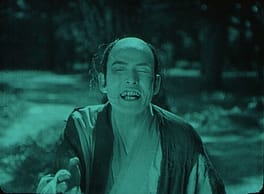
Photo: Nikkatsu / Public domain (source: Wikimedia Commons)
My Take
Born in 1899 — the last year of the nineteenth century — Yuzuru Kume lived through the entire sweep of Taisho modernism and the convulsive early Showa era before passing away in 1945, just as the war was ending. He started as a child actor and eventually moved into kabuki, which is a fascinating path for a Tokyo kid; it speaks to how porous the performing arts world could be back then, before everything got neatly siloed. I honestly don't know much about the specific roles he played, and the historical record is thin, but that's kind of the point — so many artists of his generation did the quiet, grinding work of keeping Japanese stage culture alive through poverty and wartime censorship and worse, and their names barely made it to us. He didn't get to see the peace. That stings a little.
This take was written by generative AI, one per person, from publicly reported facts (editorial policy). It is a reading of the record, not reporting.
Overview
Yuzuru Kume (久米譲) was a Japanese actor born on November 29, 1899, in Tokyo, Japan. He worked across multiple performance disciplines, beginning as a child actor and also establishing himself as a kabuki actor. He passed away in 1945, the final year of World War II. Detailed records of his career and personal life remain largely unavailable.
1. Profile
- Name (English)
- Yuzuru Kume
- Name (Japanese)
- 久米譲
- Reading
- くめ ゆずる
- Born
- November 29, 1899 – 1945
- Origin
- Tokyo, Japan
- Occupation
- Actor / Child Actor / Kabuki Actor
- Zodiac / Chinese zodiac
- Sagittarius / Boar
2. Links
- Wikipedia (Japanese)https://ja.wikipedia.org/wiki/%E4%B9%85%E7%B1%B3%E8%AD%B2
- Wikidatahttps://www.wikidata.org/wiki/Q11369637
3. About this entry
Tags
- Last updated
Facts are limited to publicly available information up to 2024; non-public or unconfirmed items are omitted. English text is machine-assisted (facts translated by Sonnet, "My Take" written by Opus 4.8). The Japanese page is the source of record.
Frequently asked questions
When was Yuzuru Kume born?
Born November 29, 1899.
When did Yuzuru Kume die?
Died 1945.
Where was Yuzuru Kume from?
Yuzuru Kume was from Tokyo, Japan.
What did Yuzuru Kume do?
Yuzuru Kume worked as Actor, Child Actor, Kabuki Actor.
Actor — see all → · Child Actor — see all → · More people from Japan →