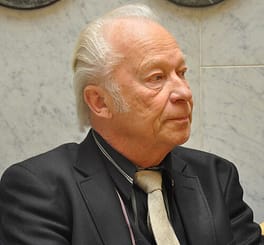
Photo: Soppakanuuna / CC BY-SA 3.0 (source: Wikimedia Commons)
Aulis Sallinen was born on April 9, 1935 in Salmi, Russia and is credited as a composer and musicologist. As of 2026, Aulis Sallinen is 91 years old. Recorded honors include Pro Finlandia Medal of the Order of the Lion of Finland (1984), Wihuri Sibelius Prize (1983), Sibelius Medal and 3 more. Notable works include The Palace Rhapsody, Chamber Music III and Symphony No. 2.
My Take
Aulis Sallinen is the kind of composer I wish more casual listeners knew. Born in 1935 in Salmi, in what was then Finnish Karelia, and trained at the Sibelius Academy under Joonas Kokkonen, he became a cornerstone of Finnish contemporary music. I'm fascinated that his work has been called both "remorselessly harsh" and "neo-romantic," because that contradiction is exactly what makes him worth the effort: severity and warmth in the same breath. The honors, the Wihuri Sibelius Prize, the Pro Finlandia Medal, the Chevalier des Arts et des Lettres, only confirm his standing. With operas like The Palace and his Symphony No. 2, he's an artist I'd happily sit down and listen to properly.
This take was written by generative AI, one per person, from publicly reported facts (editorial policy). It is a reading of the record, not reporting.
1. Profile
- Name (English)
- Aulis Sallinen
- Name (Japanese)
- アウリス・サッリネン
- Reading
- あうりす・さっりねん
- Born
- April 9, 1935 (age 91)
- Origin
- Salmi, Russia
- Occupation
- composer / musicologist
- Zodiac / Chinese zodiac
- Aries / Boar
2. Background
Awards & achievements
- 1984 Pro Finlandia Medal of the Order of the Lion of Finland
- 1983 Wihuri Sibelius Prize
- Sibelius Medal
- Chevalier des Arts et des Lettres
- 2012 Commander First Class of the Order of the Lion of Finland
- 1997 Commander of the Order of the White Rose of Finland
3. Works & records
Filmography / notable works
| Category | Title |
|---|---|
| Notable work | The Palace Rhapsody |
| Notable work | Chamber Music III |
| Notable work | Symphony No. 2 |
4. Links
5. About this entry
Tags
- Last updated
Facts are limited to publicly available information up to 2024; non-public or unconfirmed items are omitted. English text is machine-assisted (facts translated by Sonnet, "My Take" written by Opus 4.8). The Japanese page is the source of record.
Frequently asked questions
When was Aulis Sallinen born?
Born April 9, 1935 (age 91).
Where is Aulis Sallinen from?
Aulis Sallinen is from Salmi, Russia.
What does Aulis Sallinen do?
Aulis Sallinen works as composer, musicologist.
What is Aulis Sallinen known for?
Notable works include The Palace Rhapsody, Chamber Music III, Symphony No. 2.
Composer — see all → · Musicologist — see all → · More people from Russia →