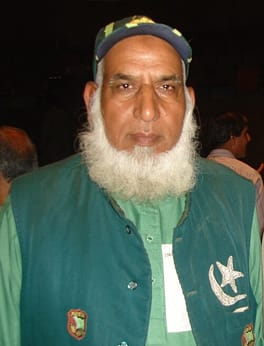
Photo: Maaid / FAL (source: Wikimedia Commons)
Chacha Cricket was born on October 8, 1949 in Daska, Sialkot District, Pakistan. Public records list Chacha Cricket as a cricketer. The age as of 2026 is 76.
My Take
Chacha Cricket is, for me, one of the purest figures in all of sport. Born Chaudhry Abdul Jalil in Daska, he is not a player at all but Pakistan's beloved cricket mascot, instantly recognizable by his white beard, green kurta and star-and-crescent cap. Think about it: a man, now well past seventy, who follows his national team everywhere, win or lose, flag in hand. That devotion outshines many superstars. He reminds us that fandom can be a vocation, even an art. I genuinely revere people who give their whole hearts to something without ever needing the spotlight. He earns my deepest respect.
This take was written by generative AI, one per person, from publicly reported facts (editorial policy). It is a reading of the record, not reporting.
1. Profile
- Name (English)
- Chacha Cricket
- Name (Japanese)
- チャチャ・クリケット
- Reading
- ちゃちゃ・くりけっと
- Born
- October 8, 1949 (age 76)
- Origin
- Daska, Sialkot District, Pakistan
- Occupation
- cricketer
- Zodiac / Chinese zodiac
- Libra / Ox
2. Links
3. About this entry
Tags
- Last updated
Facts are limited to publicly available information up to 2024; non-public or unconfirmed items are omitted. English text is machine-assisted (facts translated by Sonnet, "My Take" written by Opus 4.8). The Japanese page is the source of record.
Frequently asked questions
When was Chacha Cricket born?
Born October 8, 1949 (age 76).
Where is Chacha Cricket from?
Chacha Cricket is from Daska, Sialkot District, Pakistan.
What does Chacha Cricket do?
Chacha Cricket works as cricketer.