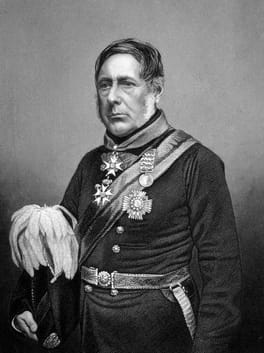
Photo: Unknown author / Public domain (source: Wikimedia Commons)
Lord William Bentinck was a politician, diplomat and military personnel. Lord William Bentinck was born on September 14, 1774 in Portland, Oregon, United States. Death is recorded on June 17, 1839, at the age of 64. Awards on record include Knight Grand Cross of the Order of the Bath and Royal Guelphic Order.
My Take
Lord William Bentinck fascinates me as a study in the contradictions of power. A British soldier and statesman, he became the first Governor-General of India, and history remembers him chiefly for the 1829 abolition of sati. I find him impossible to read in a single key: he was an agent of colonial rule, yet he used that authority to outlaw a practice that cost women their lives. I hold both of those truths at once rather than flattening him into hero or villain. That he still provokes argument nearly two centuries on is, to me, the surest measure of how consequential a figure he was.
This take was written by generative AI, one per person, from publicly reported facts (editorial policy). It is a reading of the record, not reporting.
1. Profile
- Name (English)
- Lord William Bentinck
- Name (Japanese)
- ウィリアム・キャヴェンディッシュ=ベンティンク
- Reading
- うぃりあむ・きゃゔぇんでぃっしゅ=べんてぃんく
- Born
- September 14, 1774 – June 17, 1839
- Origin
- Portland, Oregon, United States
- Occupation
- politician / diplomat / military personnel / cricketer / military officer
- Zodiac / Chinese zodiac
- Virgo / Horse
2. Background
Awards & achievements
- Knight Grand Cross of the Order of the Bath
- Royal Guelphic Order
3. Links
- Wikipedia (English)https://en.wikipedia.org/wiki/Lord%20William%20Bentinck
- Wikipedia (Japanese)https://ja.wikipedia.org/wiki/%E3%82%A6%E3%82%A3%E3%83%AA%E3%82%A2%E3%83%A0%E3%83%BB%E3%82%AD%E3%83%A3%E3%83%B4%E3%82%A7%E3%83%B3%E3%83%87%E3%82%A3%E3%83%83%E3%82%B7%E3%83%A5%EF%BC%9D%E3%83%99%E3%83%B3%E3%83%86%E3%82%A3%E3%83%B3%E3%82%AF%20(%E3%82%A4%E3%83%B3%E3%83%89%E7%B7%8F%E7%9D%A3)
- Wikidatahttps://www.wikidata.org/wiki/Q138559
4. About this entry
Tags
- Last updated
Facts are limited to publicly available information up to 2024; non-public or unconfirmed items are omitted. English text is machine-assisted (facts translated by Sonnet, "My Take" written by Opus 4.8). The Japanese page is the source of record.
Frequently asked questions
When was Lord William Bentinck born?
Born September 14, 1774.
When did Lord William Bentinck die?
Died June 17, 1839, aged 64.
Where was Lord William Bentinck from?
Lord William Bentinck was from Portland, Oregon, United States.
What did Lord William Bentinck do?
Lord William Bentinck worked as politician, diplomat, military personnel, cricketer, military officer.
Politician — see all → · Diplomat — see all → · More people from the United States →