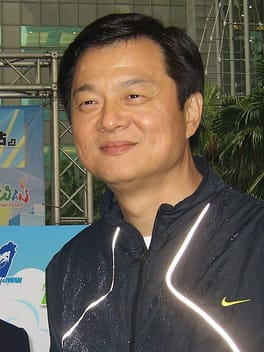
Photo: Rico Shen / CC BY-SA 4.0 (source: Wikimedia Commons)
Chou Hsi-wei, born on March 11, 1958 in Changhua County, Taiwan, is a politician and professor. That puts Chou Hsi-wei at 68 years old in 2026. Education on record includes Fu Jen Catholic University.
My Take
What interests me most about Chou Hsi-wei is the dual identity of scholar and statesman. Moving from the Legislative Yuan to Taipei County Magistrate is no small leap, and doing so while switching from the People First Party to the Kuomintang shows a politician willing to reposition himself in a turbulent landscape. I tend to respect figures who hold both intellectual credentials and the nerve to run actual administration, and his arc from Fu Jen Catholic University into the heart of Taiwanese governance fits that mold. He is the kind of regional political figure I think deserves more attention outside Taiwan.
This take was written by generative AI, one per person, from publicly reported facts (editorial policy). It is a reading of the record, not reporting.
1. Profile
- Name (English)
- Chou Hsi-wei
- Name (Japanese)
- 周錫瑋
- Reading
- しゅう・しゃくい
- Born
- March 11, 1958 (age 68)
- Origin
- Changhua County, Taiwan
- Occupation
- politician / professor
- Zodiac / Chinese zodiac
- Pisces / Dog
2. Background
- University
- Fu Jen Catholic University
3. Links
- Wikipedia (English)https://en.wikipedia.org/wiki/Chou%20Hsi-wei
- Wikipedia (Japanese)https://ja.wikipedia.org/wiki/%E5%91%A8%E9%8C%AB%E7%91%8B
- Wikidatahttps://www.wikidata.org/wiki/Q5105427
4. About this entry
Tags
- Last updated
Facts are limited to publicly available information up to 2024; non-public or unconfirmed items are omitted. English text is machine-assisted (facts translated by Sonnet, "My Take" written by Opus 4.8). The Japanese page is the source of record.
Frequently asked questions
When was Chou Hsi-wei born?
Born March 11, 1958 (age 68).
Where is Chou Hsi-wei from?
Chou Hsi-wei is from Changhua County, Taiwan.
What does Chou Hsi-wei do?
Chou Hsi-wei works as politician, professor.
Politician — see all → · Professor — see all → · More people from Taiwan →