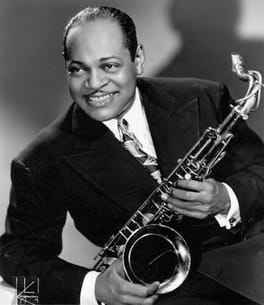
Photo: Unknown author / Public domain (source: Wikimedia Commons)
Born on November 21, 1904 in St. Joseph, Missouri, United States, Coleman Hawkins was a saxophonist, jazz musician and composer. Coleman Hawkins died on May 19, 1969 at the age of 64. Education on record includes Topeka High School.
My Take
Coleman Hawkins is, to me, simply foundational. He took the tenor saxophone, an instrument once treated as novelty, and gave it gravity, phrasing and soul, becoming one of the first true jazz voices on the horn. His 1939 Body and Soul remains a landmark of improvisation, a record that essentially rewrote what a solo could be. Born in 1904 and active until his death in 1969, Hawk lived through and shaped nearly the entire arc of jazz history. That warm, commanding tone still floors me. He wasn't just a great player; he was an architect of the language itself.
This take was written by generative AI, one per person, from publicly reported facts (editorial policy). It is a reading of the record, not reporting.
1. Profile
- Name (English)
- Coleman Hawkins
- Name (Japanese)
- コールマン・ホーキンス
- Reading
- こーるまん・ほーきんす
- Born
- November 21, 1904 – May 19, 1969
- Origin
- St. Joseph, Missouri, United States
- Occupation
- saxophonist / jazz musician / composer / musician
- Zodiac / Chinese zodiac
- Scorpio / Dragon
2. Background
- High school
- Topeka High School
3. Links
4. About this entry
Tags
- Last updated
Facts are limited to publicly available information up to 2024; non-public or unconfirmed items are omitted. English text is machine-assisted (facts translated by Sonnet, "My Take" written by Opus 4.8). The Japanese page is the source of record.
Frequently asked questions
When was Coleman Hawkins born?
Coleman Hawkins was born on November 21, 1904.
When did Coleman Hawkins die?
Coleman Hawkins died on May 19, 1969, aged 64.
Where was Coleman Hawkins from?
Coleman Hawkins was from St. Joseph, Missouri, United States.
What did Coleman Hawkins do?
Coleman Hawkins worked as saxophonist, jazz musician, composer, musician.
Which high school did Coleman Hawkins attend?
Coleman Hawkins attended Topeka High School.
Saxophonist — see all → · Jazz musician — see all → · More people from the United States → · More people born on November 21 →