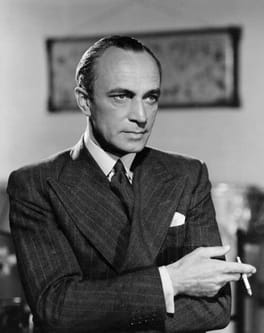
Photo: MGM-photo by Clarence Bull. / Public domain (source: Wikimedia Commons)
Born on January 22, 1893, Conrad Veidt was from Berlin, Germany. Conrad Veidt was listed as a film actor, stage actor and film director. Death is recorded on April 3, 1943, at the age of 50.
My Take
Conrad Veidt is one of those silent-era figures whose face seems to contain entire films. As Cesare in The Cabinet of Dr. Caligari and the haunting lead of The Man Who Laughs, he gave German Expressionism some of its most unforgettable imagery, and that grin reportedly inspired the Joker. What elevates him for me is his conscience: he fled Nazi Germany and spent his later career playing the very villains he opposed in life. I am drawn to artists who act on principle, and Veidt did. Though he died in 1943, his stare still pins you to the screen. A true actor.
This take was written by generative AI, one per person, from publicly reported facts (editorial policy). It is a reading of the record, not reporting.
1. Profile
- Name (English)
- Conrad Veidt
- Name (Japanese)
- コンラート・ファイト
- Reading
- こんらーと・ふぁいと
- Born
- January 22, 1893 – April 3, 1943
- Origin
- Berlin, Germany
- Occupation
- film actor / stage actor / film director / director / film producer
- Zodiac / Chinese zodiac
- Aquarius / Snake
2. Links
3. About this entry
Tags
- Last updated
Facts are limited to publicly available information up to 2024; non-public or unconfirmed items are omitted. English text is machine-assisted (facts translated by Sonnet, "My Take" written by Opus 4.8). The Japanese page is the source of record.
Frequently asked questions
When was Conrad Veidt born?
Conrad Veidt was born on January 22, 1893.
When did Conrad Veidt die?
Conrad Veidt died on April 3, 1943, aged 50.
Where was Conrad Veidt from?
Conrad Veidt was from Berlin, Germany.
What did Conrad Veidt do?
Conrad Veidt worked as film actor, stage actor, film director, director, film producer.
Film actor — see all → · Stage actor — see all → · More people from Germany → · More people born on January 22 →