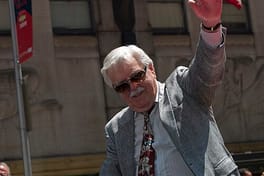
Photo: Rubenstein / CC BY 2.0 (source: Wikimedia Commons)
Dick Williams was born in St. Louis, Missouri, United States on May 7, 1929. Dick Williams was listed as a baseball player. Death is recorded on July 7, 2011, at the age of 82. Education on record includes Beaumont High School. Listed accolades include Boston Red Sox Hall of Fame.
My Take
Dick Williams is one of those figures I find more compelling as a leader than as a player. The record speaks plainly: three American League pennants, a National League pennant, and two World Series titles as a manager. That's a resume built on results, not charisma. What I keep coming back to is the description of him as hard-driving and sharp-tongued, because that tells me he was the kind of manager players probably hated in the moment and credited years later. His induction into the Boston Red Sox Hall of Fame fits that arc. To me he embodies the old-school baseball man who won by demanding more than people thought they had.
This take was written by generative AI, one per person, from publicly reported facts (editorial policy). It is a reading of the record, not reporting.
1. Profile
- Name (English)
- Dick Williams
- Name (Japanese)
- ディック・ウィリアムズ
- Reading
- でぃっく・うぃりあむず
- Born
- May 7, 1929 – July 7, 2011
- Origin
- St. Louis, Missouri, United States
- Occupation
- baseball player
- Zodiac / Chinese zodiac
- Taurus / Snake
2. Background
- High school
- Beaumont High School
Awards & achievements
- Boston Red Sox Hall of Fame
3. Links
4. About this entry
Tags
- Last updated
Facts are limited to publicly available information up to 2024; non-public or unconfirmed items are omitted. English text is machine-assisted (facts translated by Sonnet, "My Take" written by Opus 4.8). The Japanese page is the source of record.
Frequently asked questions
When was Dick Williams born?
Born May 7, 1929.
When did Dick Williams die?
Died July 7, 2011, aged 82.
Where was Dick Williams from?
Dick Williams was from St. Louis, Missouri, United States.
What did Dick Williams do?
Dick Williams worked as baseball player.
Baseball player — see all → · More people from the United States →