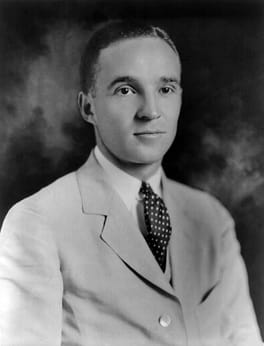
Photo: Frank Moore Studio / Public domain (source: Wikimedia Commons)
Born on November 6, 1893, Edsel Bryant Ford was from Detroit, Michigan, United States. Edsel Bryant Ford was credited as an entrepreneur and art collector. Death is recorded on May 26, 1943, at the age of 49.
My Take
Edsel Ford is one of those figures history has never quite done justice to. Growing up as Henry Ford's only son in Detroit meant living in the longest shadow in American industry, and yet Edsel carved out something genuinely his own. He had real aesthetic sensibility — the man championed design and styling at Ford when his father barely cared about anything beyond mechanical function — and the Lincoln Continental that emerged from his vision is still considered one of the most beautiful American cars ever made. He was also a serious art collector and philanthropist who helped build the Detroit Institute of Arts into a world-class institution. The tragedy is that he died at just 49, worn down by illness and, by most accounts, years of being overruled by a domineering father. I can't help but wonder what Ford Motor Company — and American car design — would have looked like if he'd had another decade.
This take was written by generative AI, one per person, from publicly reported facts (editorial policy). It is a reading of the record, not reporting.
1. Profile
- Name (English)
- Edsel Bryant Ford
- Name (Japanese)
- エドセル・フォード
- Reading
- えどせる・ふぉーど
- Born
- November 6, 1893 – May 26, 1943
- Origin
- Detroit, Michigan, United States
- Occupation
- entrepreneur / art collector
- Zodiac / Chinese zodiac
- Scorpio / Snake
2. Links
3. About this entry
Tags
- Last updated
Only publicly available facts are listed; non-public or unconfirmed items are omitted. Base data was compiled from Wikidata from June 2026 onward; ages are recalculated daily and deaths are checked against Wikidata on an ongoing basis. English text is machine-assisted (facts translated by Sonnet, "My Take" written by Opus 4.8). The Japanese page is the source of record.
Frequently asked questions
When was Edsel Bryant Ford born?
Edsel Bryant Ford was born on November 6, 1893.
When did Edsel Bryant Ford die?
Edsel Bryant Ford died on May 26, 1943, aged 49.
Where was Edsel Bryant Ford from?
Edsel Bryant Ford was from Detroit, Michigan, United States.
What did Edsel Bryant Ford do?
Edsel Bryant Ford worked as entrepreneur, art collector.
Entrepreneur — see all → · Art collector — see all → · More people from the United States → · More people born on November 6 →