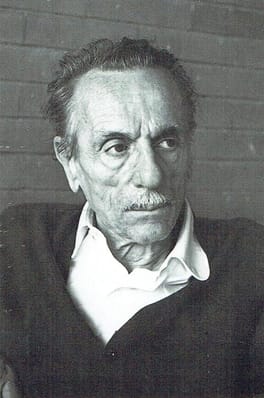
Photo: Unknown author / Public domain (source: Wikimedia Commons)
Eduardo De Filippo was a film director, poet and screenwriter, born on May 24, 1900 in Naples, Campania, Italy. Death is recorded on October 31, 1984, at the age of 84. Listed accolades include Knight Grand Cross of the Order of Merit of the Italian Republic (1973) and Feltrinelli Prize. Eduardo De Filippo was associated with Saturday Sunday Monday and Filumena Marturano.
My Take
Eduardo De Filippo is a figure I hold in deep reverence. Born in Naples in 1900, he was an actor, playwright, director, poet, and even a politician, a genuine giant of Italian culture. His Neapolitan masterpieces Filumena Marturano and Napoli milionaria pressed the joys and sorrows of ordinary Naples straight onto the stage. What moves me most is that, even crowned with the Grand Cross of the Order of Merit, his gaze stayed fixed on the common people of the back streets. He used his immense artistic standing to honor those who had so little. As the man who carried the soul of Naples to the world, he commands my lasting respect.
This take was written by generative AI, one per person, from publicly reported facts (editorial policy). It is a reading of the record, not reporting.
1. Profile
- Name (English)
- Eduardo De Filippo
- Name (Japanese)
- エドゥアルド・デ・フィリッポ
- Reading
- えどぅあるど・で・ふぃりっぽ
- Born
- May 24, 1900 – October 31, 1984
- Origin
- Naples, Campania, Italy
- Occupation
- film director / poet / screenwriter / politician / writer
- Zodiac / Chinese zodiac
- Gemini / Rat
2. Background
Awards & achievements
- 1973 Knight Grand Cross of the Order of Merit of the Italian Republic
- Feltrinelli Prize
3. Works & records
Filmography / notable works
| Category | Title |
|---|---|
| Notable work | Saturday Sunday Monday |
| Notable work | Filumena Marturano |
4. Links
5. About this entry
Tags
- Last updated
Facts are limited to publicly available information up to 2024; non-public or unconfirmed items are omitted. English text is machine-assisted (facts translated by Sonnet, "My Take" written by Opus 4.8). The Japanese page is the source of record.
Frequently asked questions
When was Eduardo De Filippo born?
Born May 24, 1900.
When did Eduardo De Filippo die?
Died October 31, 1984, aged 84.
Where was Eduardo De Filippo from?
Eduardo De Filippo was from Naples, Campania, Italy.
What did Eduardo De Filippo do?
Eduardo De Filippo worked as film director, poet, screenwriter, politician, writer.
What was Eduardo De Filippo known for?
Notable works include Saturday Sunday Monday, Filumena Marturano.
Film director — see all → · Poet — see all → · More people from Italy →