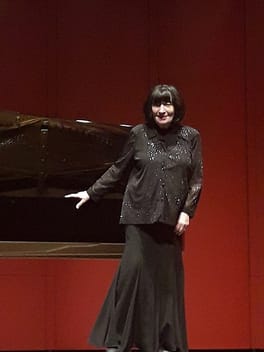
Photo: Amadalvarez / CC BY-SA 4.0 (source: Wikimedia Commons)
Eliso Virsaladze is a pianist, music educator and musician, born on September 14, 1942 in Tbilisi, Georgia Governorate, Georgia. Eliso Virsaladze is 84 years old as of 2026. Awards on record include Order of Honour, People's Artist of the USSR, Order "For Merit to the Fatherland", 4th class and 5 more.
My Take
Eliso Virsaladze is the kind of artist I have deep respect for even before hearing a note. A Georgian pianist born in Tbilisi in 1942, she carries an extraordinary weight of recognition, named People's Artist of the USSR, honored in Georgia, and awarded the State Prize of the Russian Federation in 1999. What moves me most is that she's also a music educator, because I value performers who pass their craft forward rather than guarding it. The 1976 Schumann Prize from Zwickau hints to me at a real affinity for the Romantic repertoire. She represents a serious classical tradition that I think deserves far more attention than it usually gets.
This take was written by generative AI, one per person, from publicly reported facts (editorial policy). It is a reading of the record, not reporting.
1. Profile
- Name (English)
- Eliso Virsaladze
- Name (Japanese)
- エリソ・ヴィルサラーゼ
- Reading
- えりそ・ゔぃるさらーぜ
- Born
- September 14, 1942 (age 84)
- Origin
- Tbilisi, Georgia Governorate, Georgia
- Occupation
- pianist / music educator / musician
- Zodiac / Chinese zodiac
- Virgo / Horse
2. Background
Awards & achievements
- Order of Honour
- People's Artist of the USSR
- Order "For Merit to the Fatherland", 4th class
- People's artist of the Georgian SSR
- Presidential Order of Excellence
- 1999 State Prize of the Russian Federation
- Shota Rustaveli State Prize
- 1976 Robert Schumann Prize of the City of Zwickau
3. Links
- Official sitehttps://elisovirsaladze.com
- Wikipedia (English)https://en.wikipedia.org/wiki/Eliso%20Virsaladze
- Wikipedia (Japanese)https://ja.wikipedia.org/wiki/%E3%82%A8%E3%83%AA%E3%82%BD%E3%83%BB%E3%83%B4%E3%82%A3%E3%83%AB%E3%82%B5%E3%83%A9%E3%83%BC%E3%82%BC
- Wikidatahttps://www.wikidata.org/wiki/Q273667
4. About this entry
Tags
- Last updated
Facts are limited to publicly available information up to 2024; non-public or unconfirmed items are omitted. English text is machine-assisted (facts translated by Sonnet, "My Take" written by Opus 4.8). The Japanese page is the source of record.
Frequently asked questions
When was Eliso Virsaladze born?
Born September 14, 1942 (age 84).
Where is Eliso Virsaladze from?
Eliso Virsaladze is from Tbilisi, Georgia Governorate, Georgia.
What does Eliso Virsaladze do?
Eliso Virsaladze works as pianist, music educator, musician.
Pianist — see all → · Music educator — see all → · More people from Georgia →