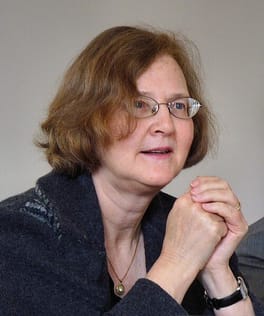
Photo: Gerbil / CC BY-SA 3.0 (source: Wikimedia Commons)
Elizabeth Blackburn was born on November 26, 1948 in Hobart, Tasmania, Australia. Elizabeth Blackburn is listed as a molecular biologist, biochemist and university teacher. The age as of 2026 is 77. Schooling on record includes University High School and University of Melbourne. Recorded honors include Albert Lasker Award for Basic Medical Research (2006), Nobel Prize in Physiology or Medicine (2009), L'Oréal-UNESCO Award For Women in Science (2008) and 5 more.
My Take
Elizabeth Blackburn is exactly the kind of person I think deserves far more household recognition than she gets. Born in Hobart, Tasmania and educated at the University of Melbourne, she co-discovered telomerase with Carol Greider, work that earned her the 2009 Nobel Prize in Physiology or Medicine. The award list is staggering: Lasker, Gairdner, Benjamin Franklin Medal, L'Oréal-UNESCO for Women in Science. Telomeres sit right at the heart of how we age, so her science feels personally relevant in a way most discoveries don't. I find it inspiring that she later led the Salk Institute, proving great researchers can also lead institutions.
This take was written by generative AI, one per person, from publicly reported facts (editorial policy). It is a reading of the record, not reporting.
1. Profile
- Name (English)
- Elizabeth Blackburn
- Name (Japanese)
- エリザベス・H・ブラックバーン
- Reading
- えりざべす・H・ぶらっくばーん
- Born
- November 26, 1948 (age 77)
- Origin
- Hobart, Tasmania, Australia
- Occupation
- biologist / molecular biologist / biochemist / university teacher
- Zodiac / Chinese zodiac
- Sagittarius / Rat
2. Background
- High school
- University High School
- University
- University of Melbourne
Awards & achievements
- 2006 Albert Lasker Award for Basic Medical Research
- 2009 Nobel Prize in Physiology or Medicine
- 2008 L'Oréal-UNESCO Award For Women in Science
- 2005 Benjamin Franklin Medal
- 1999 Harvey Prize
- 1998 Canada Gairdner International Award
- 2009 Paul Ehrlich and Ludwig Darmstaedter Prize
- 2007 Louisa Gross Horwitz Prize
3. Links
- Official sitehttps://blackburnlab.ucsf.edu
- Wikipedia (English)https://en.wikipedia.org/wiki/Elizabeth%20Blackburn
- Wikipedia (Japanese)https://ja.wikipedia.org/wiki/%E3%82%A8%E3%83%AA%E3%82%B6%E3%83%99%E3%82%B9%E3%83%BBH%E3%83%BB%E3%83%96%E3%83%A9%E3%83%83%E3%82%AF%E3%83%90%E3%83%BC%E3%83%B3
- Wikidatahttps://www.wikidata.org/wiki/Q26321
4. About this entry
Tags
- Last updated
Facts are limited to publicly available information up to 2024; non-public or unconfirmed items are omitted. English text is machine-assisted (facts translated by Sonnet, "My Take" written by Opus 4.8). The Japanese page is the source of record.
Frequently asked questions
When was Elizabeth Blackburn born?
Born November 26, 1948 (age 77).
Where is Elizabeth Blackburn from?
Elizabeth Blackburn is from Hobart, Tasmania, Australia.
What does Elizabeth Blackburn do?
Elizabeth Blackburn works as biologist, molecular biologist, biochemist, university teacher.