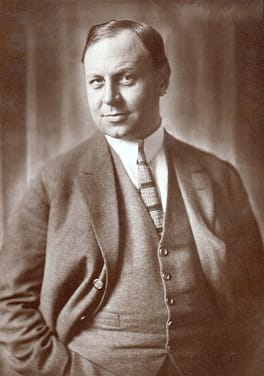
Photo: Unknown author / Public domain (source: Wikimedia Commons)
Emil Jannings, born on July 23, 1884 in Rorschach, Canton of St. Gallen, Switzerland, was an actor, film director and theatre manager. Death is recorded on January 2, 1950, at the age of 65. Recorded honors include Academy Award for Best Actor (1929), Volpi Cup for Best Actor (1937), Staatsschauspieler (1936) and 2 more.
My Take
Emil Jannings stands at the very origin of film history as the first Best Actor Oscar winner, and that alone fascinates me. Swiss-born and German-made, he could pour thunderous emotion through a single face in the silent era, then add a Volpi Cup and a Walk of Fame star. Yet I can't discuss him without the shadow of his later proximity to the Nazi regime, and I prefer not to separate the two. His career holds both glory and disgrace in one frame, a sobering reminder of how great talent can be swallowed by its era. He carries the whole turbulent story of cinema with him.
This take was written by generative AI, one per person, from publicly reported facts (editorial policy). It is a reading of the record, not reporting.
1. Profile
- Name (English)
- Emil Jannings
- Name (Japanese)
- エミール・ヤニングス
- Reading
- えみーる・やにんぐす
- Born
- July 23, 1884 – January 2, 1950
- Origin
- Rorschach, Canton of St. Gallen, Switzerland
- Occupation
- actor / film director / theatre manager / film producer / director
- Zodiac / Chinese zodiac
- Leo / Monkey
2. Background
Awards & achievements
- 1929 Academy Award for Best Actor
- 1937 Volpi Cup for Best Actor
- 1936 Staatsschauspieler
- star on Hollywood Walk of Fame
- 1939 Goethe Medal for Art and Science
3. Links
4. About this entry
Tags
- Last updated
Facts are limited to publicly available information up to 2024; non-public or unconfirmed items are omitted. English text is machine-assisted (facts translated by Sonnet, "My Take" written by Opus 4.8). The Japanese page is the source of record.
Frequently asked questions
When was Emil Jannings born?
Emil Jannings was born on July 23, 1884.
When did Emil Jannings die?
Emil Jannings died on January 2, 1950, aged 65.
Where was Emil Jannings from?
Emil Jannings was from Rorschach, Canton of St. Gallen, Switzerland.
What did Emil Jannings do?
Emil Jannings worked as actor, film director, theatre manager, film producer, director.
Actor — see all → · Film director — see all → · More people from Switzerland → · More people born on July 23 →