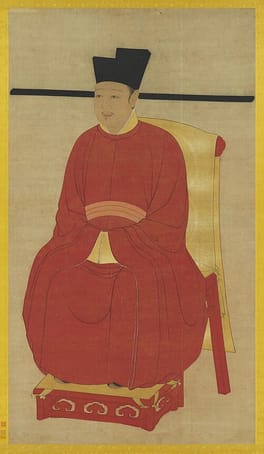
Photo: Unknown author / Public domain (source: Wikimedia Commons)
Emperor Huizong of Song was born on November 2, 1082 in Kaifeng, People's Republic of China. Emperor Huizong of Song was listed as a painter, poet and ruler. Death is recorded on June 4, 1135, at the age of 52.
My Take
Huizong fascinates me because he was the rare ruler who poured his soul into brush and ink rather than statecraft, and history has judged him harshly for it. But I refuse to read him only as the emperor who lost the Northern Song. The slender, almost calligraphic line he invented and his luminous bird-and-flower paintings reveal a man chasing beauty as if it were truth itself. Power and art rarely coexist so painfully in one person. A thousand years on, I find his aesthetic legacy far more moving than any verdict on his reign, and I keep returning to it.
This take was written by generative AI, one per person, from publicly reported facts (editorial policy). It is a reading of the record, not reporting.
1. Profile
- Name (English)
- Emperor Huizong of Song
- Name (Japanese)
- 徽宗
- Reading
- きそう
- Born
- November 2, 1082 – June 4, 1135
- Origin
- Kaifeng, People's Republic of China
- Occupation
- painter / poet / ruler / musician / calligrapher
- Zodiac / Chinese zodiac
- Scorpio / Dog
2. Links
- Wikipedia (English)https://en.wikipedia.org/wiki/Emperor%20Huizong%20of%20Song
- Wikipedia (Japanese)https://ja.wikipedia.org/wiki/%E5%BE%BD%E5%AE%97
- Wikidatahttps://www.wikidata.org/wiki/Q7486
3. About this entry
Tags
- Last updated
Facts are limited to publicly available information up to 2024; non-public or unconfirmed items are omitted. English text is machine-assisted (facts translated by Sonnet, "My Take" written by Opus 4.8). The Japanese page is the source of record.
Frequently asked questions
When was Emperor Huizong of Song born?
Emperor Huizong of Song was born on November 2, 1082.
When did Emperor Huizong of Song die?
Emperor Huizong of Song died on June 4, 1135, aged 52.
Where was Emperor Huizong of Song from?
Emperor Huizong of Song was from Kaifeng, People's Republic of China.
What did Emperor Huizong of Song do?
Emperor Huizong of Song worked as painter, poet, ruler, musician, calligrapher.
Painter — see all → · Poet — see all → · More people from the People's Republic of China → · More people born on November 2 →