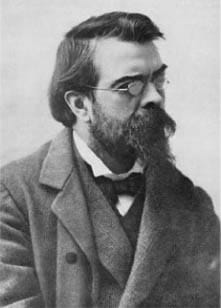
Photo: Unknown / Public domain (source: Wikimedia Commons)
Born on November 21, 1852 in Villarreal, Valencian Community, Spain, Francisco Tárrega was a composer, classical guitarist and pianist. Francisco Tárrega died on December 15, 1909 at the age of 57. Credited works include Recuerdos de la Alhambra and Capricho árabe.
My Take
Francisco Tárrega occupies a special place in my appreciation of music, because he essentially gave the classical guitar its modern voice. Recuerdos de la Alhambra still stops me in my tracks every time I hear it; that shimmering tremolo feels less like notes and more like water falling in a quiet courtyard. What moves me is how a composer from nineteenth-century Villarreal could distill such intimate emotion into so few strings. Pieces like Capricho Árabe prove his gift for evoking entire worlds with restraint. To me he is not just a virtuoso but a poet who happened to speak through six strings.
This take was written by generative AI, one per person, from publicly reported facts (editorial policy). It is a reading of the record, not reporting.
1. Profile
- Name (English)
- Francisco Tárrega
- Name (Japanese)
- フランシスコ・タレガ
- Reading
- ふらんしすこ・たれが
- Born
- November 21, 1852 – December 15, 1909
- Origin
- Villarreal, Valencian Community, Spain
- Occupation
- guitarist / composer / classical guitarist / pianist / music arranger
- Zodiac / Chinese zodiac
- Scorpio / Rat
2. Works & records
Filmography / notable works
| Category | Title |
|---|---|
| Notable work | Recuerdos de la Alhambra |
| Notable work | Capricho árabe |
3. Links
4. About this entry
Tags
- Last updated
Facts are limited to publicly available information up to 2024; non-public or unconfirmed items are omitted. English text is machine-assisted (facts translated by Sonnet, "My Take" written by Opus 4.8). The Japanese page is the source of record.
Frequently asked questions
When was Francisco Tárrega born?
Francisco Tárrega was born on November 21, 1852.
When did Francisco Tárrega die?
Francisco Tárrega died on December 15, 1909, aged 57.
Where was Francisco Tárrega from?
Francisco Tárrega was from Villarreal, Valencian Community, Spain.
What did Francisco Tárrega do?
Francisco Tárrega worked as guitarist, composer, classical guitarist, pianist, music arranger.
What was Francisco Tárrega known for?
Francisco Tárrega's notable works include Recuerdos de la Alhambra, Capricho árabe.
Guitarist — see all → · Composer — see all → · More people from Spain → · More people born on November 21 →