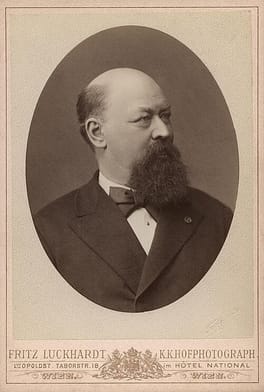
Photo: Fritz Luckhardt / Adam Cuerden / Public domain (source: Wikimedia Commons)
Born on April 18, 1819 in Split, Croatia, Franz von Suppè was a composer and conductor. Franz von Suppè died on May 21, 1895 at the age of 76. Education on record includes University of Music and Performing Arts Vienna. Awards on record include Knight's Cross of the Order of Franz Joseph (1885). Notable works include Fatinitza and Leichte Kavallerie.
My Take
Franz von Suppè is one of those composers whose music you absolutely know even if you've never heard his name — that galloping Light Cavalry overture has soundtracked everything from cartoons to horse races to TV commercials for over a century, and it still gets your pulse up. Born in Split in 1819 and trained in Vienna, he carved out a remarkable niche as the great popularizer of the Viennese operetta, essentially laying the groundwork for Lehár and the whole genre before Viennese operetta became the thing everyone wanted. His output was enormous — something like 30 operettas and countless overtures — and while his full stage works are rarely revived today, those overtures have a melodic vitality that refuses to age. Winning the Knight's Cross of the Order of Franz Joseph in 1885 was a fitting recognition for a career spent making Viennese light music genuinely glorious.
This take was written by generative AI, one per person, from publicly reported facts (editorial policy). It is a reading of the record, not reporting.
1. Profile
- Name (English)
- Franz von Suppè
- Name (Japanese)
- フランツ・フォン・スッペ
- Reading
- ふらんつ・ふぉん・すっぺ
- Born
- April 18, 1819 – May 21, 1895
- Origin
- Split, Croatia
- Occupation
- composer / conductor
- Zodiac / Chinese zodiac
- Aries / Rabbit
2. Background
- University
- University of Music and Performing Arts Vienna
Awards & achievements
- 1885 Knight's Cross of the Order of Franz Joseph
3. Works & records
Filmography / notable works
| Category | Title |
|---|---|
| Notable work | Fatinitza |
| Notable work | Leichte Kavallerie |
4. Links
5. About this entry
Tags
- Last updated
Facts are limited to publicly available information up to 2024; non-public or unconfirmed items are omitted. English text is machine-assisted (facts translated by Sonnet, "My Take" written by Opus 4.8). The Japanese page is the source of record.
Frequently asked questions
When was Franz von Suppè born?
Born April 18, 1819.
When did Franz von Suppè die?
Died May 21, 1895, aged 76.
Where was Franz von Suppè from?
Franz von Suppè was from Split, Croatia.
What did Franz von Suppè do?
Franz von Suppè worked as composer, conductor.
What was Franz von Suppè known for?
Notable works include Fatinitza, Leichte Kavallerie.
Composer — see all → · Conductor — see all → · More people from Croatia →