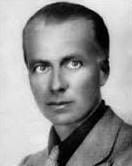
Photo: Unknown author / Public domain (source: Wikimedia Commons)
Giacinto Scelsi was born in Pitelli, Province of La Spezia, Italy on January 8, 1905. Public records list Giacinto Scelsi as a composer, poet and musician. Death is recorded on August 9, 1988, at the age of 83. Credited works include Hurqualia, Suite nr. 10 and Hymnos.
My Take
Giacinto Scelsi fascinates me precisely because he resists easy explanation. An Italian count who also wrote surrealist poetry in French, he spent much of his career on a single radical idea: that you could build entire works around one note, exploring its inner life through microtonal shifts and timbre. Pieces like Hymnos and Hurqualia feel less composed than excavated. For a long time he was a marginal figure, almost a rumor, and only later did musicians catch up to what he was doing. I find that arc moving. He died in 1988 having quietly anticipated where a lot of later music would go, without ever chasing recognition for it.
This take was written by generative AI, one per person, from publicly reported facts (editorial policy). It is a reading of the record, not reporting.
1. Profile
- Name (English)
- Giacinto Scelsi
- Name (Japanese)
- ジャチント・シェルシ
- Reading
- じゃちんと・しぇるし
- Born
- January 8, 1905 – August 9, 1988
- Origin
- Pitelli, Province of La Spezia, Italy
- Occupation
- composer / poet / musician
- Zodiac / Chinese zodiac
- Capricorn / Snake
2. Works & records
Filmography / notable works
| Category | Title |
|---|---|
| Notable work | Hurqualia |
| Notable work | Suite nr. 10 |
| Notable work | Hymnos |
| Notable work | Vier Stukken |
3. Links
4. About this entry
Tags
- Last updated
Facts are limited to publicly available information up to 2024; non-public or unconfirmed items are omitted. English text is machine-assisted (facts translated by Sonnet, "My Take" written by Opus 4.8). The Japanese page is the source of record.
Frequently asked questions
When was Giacinto Scelsi born?
Born January 8, 1905.
When did Giacinto Scelsi die?
Died August 9, 1988, aged 83.
Where was Giacinto Scelsi from?
Giacinto Scelsi was from Pitelli, Province of La Spezia, Italy.
What did Giacinto Scelsi do?
Giacinto Scelsi worked as composer, poet, musician.
What was Giacinto Scelsi known for?
Notable works include Hurqualia, Suite nr. 10, Hymnos.
Composer — see all → · Poet — see all → · More people from Italy →