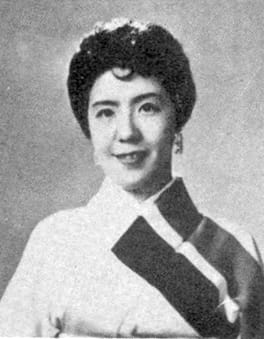
Photo: 鶴書房 / Public domain (source: Wikimedia Commons)
My Take
Hagoromo Amatsu — even the name does something to you. "Hagoromo" is the feathered robe of a celestial maiden in Japanese mythology, and whoever gave her that stage name clearly felt she had something otherworldly in her voice. Singing through all of that takes a kind of nerve and emotional depth that's hard to even picture today. She was gone at 54, which feels too soon by any measure, and the paper trail is frustratingly thin. But sometimes a beautiful name and a birth year tell you enough: she was Showa-era Japan in song form, and I wish we could hear more of what that sounded like.
This take was written by generative AI, one per person, from publicly reported facts (editorial policy). It is a reading of the record, not reporting.
Overview
Hagoromo Amatsu (born March 7, 1928; died September 13, 1982) was a Japanese singer active during the Showa era. She was born in Japan, though the specific prefecture of her birth is unknown. She passed away at the age of 54, leaving behind limited documented records of her career.
1. Profile
- Name (English)
- Hagoromo Amatsu
- Name (Japanese)
- 天津羽衣
- Reading
- あまつ はごろも
- Born
- March 7, 1928 – September 13, 1982
- Origin
- Japan
- Occupation
- Singer
- Zodiac / Chinese zodiac
- Pisces / Dragon
2. Links
- Wikipedia (Japanese)https://ja.wikipedia.org/wiki/%E5%A4%A9%E6%B4%A5%E7%BE%BD%E8%A1%A3
- Wikidatahttps://www.wikidata.org/wiki/Q11442802
3. About this entry
Tags
- Last updated
Facts are limited to publicly available information up to 2024; non-public or unconfirmed items are omitted. English text is machine-assisted (facts translated by Sonnet, "My Take" written by Opus 4.8). The Japanese page is the source of record.
Frequently asked questions
When was Hagoromo Amatsu born?
Born March 7, 1928.
When did Hagoromo Amatsu die?
Died September 13, 1982, aged 54.
Where was Hagoromo Amatsu from?
Hagoromo Amatsu was from Japan.
What did Hagoromo Amatsu do?
Hagoromo Amatsu worked as Singer.