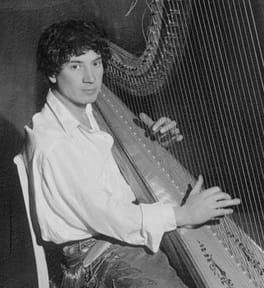
Photo: Vandamm Studio / Public domain (source: Wikimedia Commons)
Harpo Marx was a screenwriter, film actor and mime artist. Born on November 23, 1888, Harpo Marx was from New York City, New York, United States. Death is recorded on September 28, 1964, at the age of 75.
My Take
Harpo Marx is, to my mind, the most durable of the Marx Brothers precisely because he never spoke. Groucho's wordplay dates itself; Harpo's silence does not. He distilled vaudeville, clowning and pantomime into a character who could detonate a scene with a horn honk, then sit down at the harp and play with genuine, unironic beauty. That collision of anarchy and tenderness is what I keep returning to. Modern physical comedians are still borrowing from him, knowingly or not. Watching him today, nearly a century on, I am struck less by nostalgia than by how little anyone has improved on the formula.
This take was written by generative AI, one per person, from publicly reported facts (editorial policy). It is a reading of the record, not reporting.
1. Profile
- Name (English)
- Harpo Marx
- Name (Japanese)
- ハーポ・マルクス
- Reading
- はーぽ・まるくす
- Born
- November 23, 1888 – September 28, 1964
- Origin
- New York City, New York, United States
- Occupation
- screenwriter / film actor / mime artist / television actor / stage actor
- Zodiac / Chinese zodiac
- Sagittarius / Rat
2. Links
- Wikipedia (English)https://en.wikipedia.org/wiki/Harpo%20Marx
- Wikipedia (Japanese)https://ja.wikipedia.org/wiki/%E3%83%8F%E3%83%BC%E3%83%9D%E3%83%BB%E3%83%9E%E3%83%AB%E3%82%AF%E3%82%B9
- Wikidatahttps://www.wikidata.org/wiki/Q317237
3. About this entry
Tags
- Last updated
Facts are limited to publicly available information up to 2024; non-public or unconfirmed items are omitted. English text is machine-assisted (facts translated by Sonnet, "My Take" written by Opus 4.8). The Japanese page is the source of record.
Frequently asked questions
When was Harpo Marx born?
Born November 23, 1888.
When did Harpo Marx die?
Died September 28, 1964, aged 75.
Where was Harpo Marx from?
Harpo Marx was from New York City, New York, United States.
What did Harpo Marx do?
Harpo Marx worked as screenwriter, film actor, mime artist, television actor, stage actor.
Screenwriter — see all → · Film actor — see all → · More people from the United States →