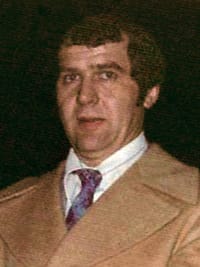
Photo: Engines On, derivative work Lämpel / CC BY-SA 4.0 (source: Wikimedia Commons)
Born on September 14, 1932 in Weston, Ontario, Canada, Harry Sinden is an ice hockey player and ice hockey coach. As of 2026, Harry Sinden is 94 years old. Recorded honors include Stanley Cup, Canada's Sports Hall of Fame, Hockey Hall of Fame and 2 more. The listed height is 178 cm.
My Take
Harry Sinden is simply a giant of ice hockey, and the breadth of his career floors me. Winning a Stanley Cup, building the Boston Bruins as coach, general manager and president, and earning a place in the Hockey Hall of Fame would be enough for most lifetimes. But coaching Team Canada in the 1972 Summit Series, with national pride on the line against the Soviets at the height of the Cold War, puts him in rarefied air. Few figures win as player, bench boss and executive alike. I have nothing but deep admiration for someone who shaped an entire era of the game.
This take was written by generative AI, one per person, from publicly reported facts (editorial policy). It is a reading of the record, not reporting.
1. Profile
- Name (English)
- Harry Sinden
- Name (Japanese)
- ハリー・シンデン
- Reading
- はりー・しんでん
- Born
- September 14, 1932 (age 94)
- Origin
- Weston, Ontario, Canada
- Height
- 178 cm
- Occupation
- ice hockey player / ice hockey coach
- Zodiac / Chinese zodiac
- Virgo / Monkey
2. Background
Awards & achievements
- Stanley Cup
- Canada's Sports Hall of Fame
- Hockey Hall of Fame
- James C. Hendy Memorial Award
- 1999 Lester Patrick Trophy
3. Links
- Wikipedia (English)https://en.wikipedia.org/wiki/Harry%20Sinden
- Wikipedia (Japanese)https://ja.wikipedia.org/wiki/%E3%83%8F%E3%83%AA%E3%83%BC%E3%83%BB%E3%82%B7%E3%83%B3%E3%83%87%E3%83%B3
- Wikidatahttps://www.wikidata.org/wiki/Q1586821
4. About this entry
Tags
- Last updated
Facts are limited to publicly available information up to 2024; non-public or unconfirmed items are omitted. English text is machine-assisted (facts translated by Sonnet, "My Take" written by Opus 4.8). The Japanese page is the source of record.
Frequently asked questions
When was Harry Sinden born?
Born September 14, 1932 (age 94).
Where is Harry Sinden from?
Harry Sinden is from Weston, Ontario, Canada.
What does Harry Sinden do?
Harry Sinden works as ice hockey player, ice hockey coach.
How tall is Harry Sinden?
Harry Sinden is 178 cm.
Ice hockey player — see all → · Ice hockey coach — see all → · More people from Canada →