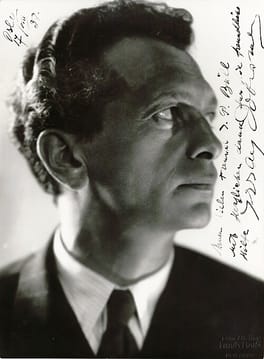
Photo: Atelier Frans Hals / CC BY-SA 3.0 (source: Wikimedia Commons)
Issay Dobrowen was a conductor, composer and pianist. Issay Dobrowen was born on February 27, 1891 in Nizhny Novgorod, Nizhny Novgorod Oblast, Russia. Death is recorded on December 9, 1953, at the age of 62.
My Take
Dobrowen's life reads like a century compressed into one biography: born in Nizhny Novgorod in 1891, fleeing Russia in 1922, becoming a Norwegian citizen by 1929. To rebuild trust as a conductor again and again, in new countries and new orchestras, takes a resilience I can barely imagine. What strikes me is his versatility, a conductor, composer and pianist all at once, as if mastering several disciplines was itself a survival strategy in an unstable age. He died in 1953, but I think of him as one of those musicians who carried art across borders when borders were brutal. He deserves quiet, lasting respect.
This take was written by generative AI, one per person, from publicly reported facts (editorial policy). It is a reading of the record, not reporting.
1. Profile
- Name (English)
- Issay Dobrowen
- Name (Japanese)
- イサイ・ドブローウェン
- Reading
- いさい・どぶろーうぇん
- Born
- February 27, 1891 – December 9, 1953
- Origin
- Nizhny Novgorod, Nizhny Novgorod Oblast, Russia
- Occupation
- conductor / composer / pianist / academic musician / general music director
- Zodiac / Chinese zodiac
- Pisces / Rabbit
2. Links
3. About this entry
Tags
- Last updated
Facts are limited to publicly available information up to 2024; non-public or unconfirmed items are omitted. English text is machine-assisted (facts translated by Sonnet, "My Take" written by Opus 4.8). The Japanese page is the source of record.
Frequently asked questions
When was Issay Dobrowen born?
Born February 27, 1891.
When did Issay Dobrowen die?
Died December 9, 1953, aged 62.
Where was Issay Dobrowen from?
Issay Dobrowen was from Nizhny Novgorod, Nizhny Novgorod Oblast, Russia.
What did Issay Dobrowen do?
Issay Dobrowen worked as conductor, composer, pianist, academic musician, general music director.
Conductor — see all → · Composer — see all → · More people from Russia →