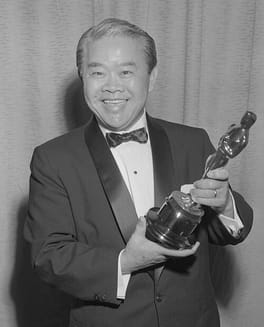
Photo: UCLA Library Special Collections / CC BY 2.0 (source: Wikimedia Commons)
James Wong Howe was a film director, cinematographer and camera operator, born on August 28, 1899 in Taishan, People's Republic of China. Death is recorded on July 12, 1976, at the age of 76. Awards on record include Academy Award for Best Cinematography, Black-and-White (1956, 1964).
My Take
James Wong Howe is the kind of artist I find more compelling than most stars. A boy born in Taishan who shot over 130 films across Hollywood's golden age, winning two Best Cinematography Oscars in black and white, and doing it while the industry was openly hostile to Asian faces. He earned his place purely through craft, smuggling in handheld shots and lighting tricks that directors couldn't refuse. The fact that his name still appears in cinematography textbooks decades after his 1976 death says everything. I value people who let the work argue on their behalf, and Howe's work shouted.
This take was written by generative AI, one per person, from publicly reported facts (editorial policy). It is a reading of the record, not reporting.
1. Profile
- Name (English)
- James Wong Howe
- Name (Japanese)
- ジェームズ・ウォン・ハウ
- Reading
- じぇーむず・うぉん・はう
- Born
- August 28, 1899 – July 12, 1976
- Origin
- Taishan, People's Republic of China
- Occupation
- film director / cinematographer / camera operator / director
- Zodiac / Chinese zodiac
- Virgo / Boar
2. Background
Awards & achievements
- 1956 Academy Award for Best Cinematography, Black-and-White
- 1964 Academy Award for Best Cinematography, Black-and-White
3. Links
4. About this entry
Tags
- Last updated
Facts are limited to publicly available information up to 2024; non-public or unconfirmed items are omitted. English text is machine-assisted (facts translated by Sonnet, "My Take" written by Opus 4.8). The Japanese page is the source of record.
Frequently asked questions
When was James Wong Howe born?
Born August 28, 1899.
When did James Wong Howe die?
Died July 12, 1976, aged 76.
Where was James Wong Howe from?
James Wong Howe was from Taishan, People's Republic of China.
What did James Wong Howe do?
James Wong Howe worked as film director, cinematographer, camera operator, director.
Film director — see all → · Cinematographer — see all → · More people from the People's Republic of China →