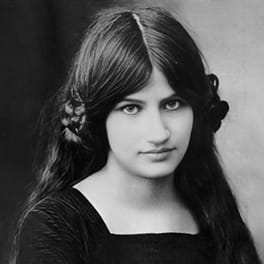
Photo: Unknown author (The photographer died most probabely 70 years ago) / Public domain (source: Wikimedia Commons)
Jeanne Hébuterne was a painter and art model. Jeanne Hébuterne was born in Meaux, Seine-et-Marne, France on April 6, 1898. Death is recorded on January 26, 1920, at the age of 21.
My Take
Jeanne Hébuterne is one of those figures who haunts you the more you learn about her — and not just because of how tragically her story ended. Born in 1898 in Meaux, France, she was a genuinely talented painter in her own right, studying at the École des Arts Décoratifs, yet history has mostly remembered her as Modigliani's muse and common-law wife. That feels unfair, honestly. She modeled for some of his most iconic elongated portraits, but she was also making her own work, quietly developing a voice, and there's something devastating about wondering what she might have become. She died just two days after Modigliani in January 1920, at only twenty-one, and now they share a grave in Père Lachaise. She deserves to be remembered as an artist, not just a footnote in someone else's legend.
This take was written by generative AI, one per person, from publicly reported facts (editorial policy). It is a reading of the record, not reporting.
1. Profile
- Name (English)
- Jeanne Hébuterne
- Name (Japanese)
- ジャンヌ・エビュテルヌ
- Reading
- じゃんぬ・えびゅてるぬ
- Born
- April 6, 1898 – January 26, 1920
- Origin
- Meaux, Seine-et-Marne, France
- Occupation
- painter / art model
- Zodiac / Chinese zodiac
- Aries / Dog
2. Links
3. About this entry
Tags
- Last updated
Facts are limited to publicly available information up to 2024; non-public or unconfirmed items are omitted. English text is machine-assisted (facts translated by Sonnet, "My Take" written by Opus 4.8). The Japanese page is the source of record.
Frequently asked questions
When was Jeanne Hébuterne born?
Born April 6, 1898.
When did Jeanne Hébuterne die?
Died January 26, 1920, aged 21.
Where was Jeanne Hébuterne from?
Jeanne Hébuterne was from Meaux, Seine-et-Marne, France.
What did Jeanne Hébuterne do?
Jeanne Hébuterne worked as painter, art model.
Painter — see all → · Art model — see all → · More people from France →