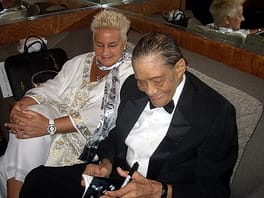
Photo: Professor Bop / CC BY 2.0 (source: Wikimedia Commons)
Jimmy Scott was born on July 17, 1925 in Cleveland, Ohio, United States and was credited as a singer and jazz musician. Jimmy Scott died on June 12, 2014 at the age of 88. Recorded honors include NEA Jazz Masters (2007).
My Take
Jimmy Scott is the kind of artist I find genuinely moving. That high, natural contralto voice was so unusual that it left people unsure what they were hearing, and his phrasing on ballads could stop a room cold. What stays with me is the shape of his career: real success in the 1940s and 50s, then a long slide into obscurity through the 60s, before a comeback in the 1990s that finally brought the NEA Jazz Masters recognition in 2007. Vindication that late in life is bittersweet. He died in 2014 at 88, and I think his patience and refusal to disappear are as remarkable as the voice itself.
This take was written by generative AI, one per person, from publicly reported facts (editorial policy). It is a reading of the record, not reporting.
1. Profile
- Name (English)
- Jimmy Scott
- Name (Japanese)
- ジミー・スコット
- Reading
- じみー・すこっと
- Born
- July 17, 1925 – June 12, 2014
- Origin
- Cleveland, Ohio, United States
- Occupation
- singer / jazz musician / musician
- Zodiac / Chinese zodiac
- Cancer / Ox
2. Background
Awards & achievements
- 2007 NEA Jazz Masters
- NEA Jazz Masters
3. Links
- Official sitehttps://www.jimmyscottofficialwebsite.org/
- Wikipedia (English)https://en.wikipedia.org/wiki/Jimmy%20Scott
- Wikipedia (Japanese)https://ja.wikipedia.org/wiki/%E3%82%B8%E3%83%9F%E3%83%BC%E3%83%BB%E3%82%B9%E3%82%B3%E3%83%83%E3%83%88
- Wikidatahttps://www.wikidata.org/wiki/Q724621
4. About this entry
Tags
- Last updated
Facts are limited to publicly available information up to 2024; non-public or unconfirmed items are omitted. English text is machine-assisted (facts translated by Sonnet, "My Take" written by Opus 4.8). The Japanese page is the source of record.
Frequently asked questions
When was Jimmy Scott born?
Born July 17, 1925.
When did Jimmy Scott die?
Died June 12, 2014, aged 88.
Where was Jimmy Scott from?
Jimmy Scott was from Cleveland, Ohio, United States.
What did Jimmy Scott do?
Jimmy Scott worked as singer, jazz musician, musician.
Singer — see all → · Jazz musician — see all → · More people from the United States →