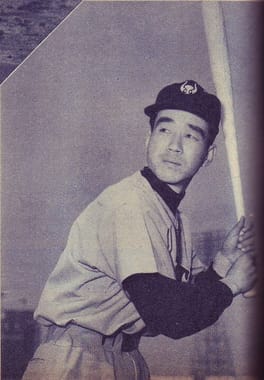
Photo: 博友社 (Hakuyu-sha Co., Ltd.) / Public domain (source: Wikimedia Commons)
My Take
I'll be honest, I came to Junzo Sekine knowing him more as a gentle, twinkly-eyed TV commentator than as a player, and then you dig in and realize this guy was the real deal, a genuine two-way talent who pitched and hit back when Japanese pro baseball was still finding its shape. Born in 1927, a Hosei man out of Sugamo, he basically grew up alongside the whole Showa era of the game, and you can feel that long arc in how he carried himself, no wasted motion, no ego, just a quiet competence that eventually carried him into the Hall of Fame. What I love is that he stayed warm and approachable to the very end, the kind of baseball elder you'd happily listen to for hours. When he passed in 2020, it really did feel like a whole gentle chapter of the sport closing.
This take was written by generative AI, one per person, from publicly reported facts (editorial policy). It is a reading of the record, not reporting.
Overview
Junzo Sekine (March 15, 1927 – April 9, 2020) was a Japanese professional baseball player born in Sugamo, Tokyo. He attended Hosei University and went on to build a career in Japanese baseball that earned him induction into the Baseball Hall of Fame. He stood 173 cm tall and passed away on April 9, 2020.
1. Profile
- Name (English)
- Junzo Sekine
- Name (Japanese)
- 関根潤三
- Reading
- せきね じゅんぞう
- Born
- March 15, 1927 – April 9, 2020
- Origin
- Sugamo, Tokyo, Japan
- Height
- 173cm
- Occupation
- Baseball player
- Zodiac / Chinese zodiac
- Pisces / Rabbit
2. Background
- University
- Hosei University
Awards & achievements
- Baseball Hall of Fame (year unknown)
3. Links
- Wikipedia (Japanese)https://ja.wikipedia.org/wiki/%E9%96%A2%E6%A0%B9%E6%BD%A4%E4%B8%89
- Wikidatahttps://www.wikidata.org/wiki/Q11656076
4. About this entry
Tags
- Last updated
Only publicly available facts are listed; non-public or unconfirmed items are omitted. Base data was compiled from Wikidata from June 2026 onward; ages are recalculated daily and deaths are checked against Wikidata on an ongoing basis. English text is machine-assisted (facts translated by Sonnet, "My Take" written by Opus 4.8). The Japanese page is the source of record.
Frequently asked questions
When was Junzo Sekine born?
Junzo Sekine was born on March 15, 1927.
When did Junzo Sekine die?
Junzo Sekine died on April 9, 2020, aged 93.
Where was Junzo Sekine from?
Junzo Sekine was from Sugamo, Tokyo, Japan.
What did Junzo Sekine do?
Junzo Sekine worked as Baseball player.
How tall was Junzo Sekine?
Junzo Sekine was 173 cm tall.
Where did Junzo Sekine study?
Junzo Sekine attended Hosei University.
Baseball player — see all → · More people from Japan → · More people born on March 15 →