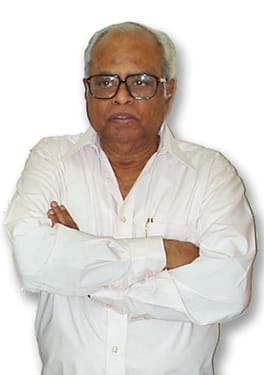
Photo: w:user:Planemad / CC BY-SA 2.5 (source: Wikimedia Commons)
Born on July 9, 1930, K. Balachander was from Nannilam, Tiruvarur district, India. K. Balachander was listed as a film director, actor and screenwriter. Death is recorded on December 23, 2014, at the age of 84. Schooling on record includes Annamalai University. Awards on record include Padma Shri in arts (1987), Dadasaheb Phalke Award (2010) and National Film Award for Best Screenplay (1982).
My Take
What strikes me about K. Balachander is how fearless his storytelling was. In an era of formulaic Tamil cinema, he built films around bold, central women and tackled subjects others wouldn't touch. The Dadasaheb Phalke Award in 2010 confirmed what audiences already knew: he was a genuine architect of South Indian film. I admire that his legacy isn't just his own movies but the talents he mentored into stardom. To me he represents the rare director who shaped both an art form and the generation that followed him, and that kind of dual influence is something I find deeply impressive.
This take was written by generative AI, one per person, from publicly reported facts (editorial policy). It is a reading of the record, not reporting.
1. Profile
- Name (English)
- K. Balachander
- Name (Japanese)
- K・バラチャンダル
- Reading
- K・ばらちゃんだる
- Born
- July 9, 1930 – December 23, 2014
- Origin
- Nannilam, Tiruvarur district, India
- Occupation
- film director / actor / screenwriter / film producer / director
- Zodiac / Chinese zodiac
- Cancer / Horse
2. Background
- University
- Annamalai University
Awards & achievements
- 1987 Padma Shri in arts
- 2010 Dadasaheb Phalke Award
- 1982 National Film Award for Best Screenplay
3. Links
- Wikipedia (English)https://en.wikipedia.org/wiki/K.%20Balachander
- Wikidatahttps://www.wikidata.org/wiki/Q3520369
4. About this entry
Tags
- Last updated
Facts are limited to publicly available information up to 2024; non-public or unconfirmed items are omitted. English text is machine-assisted (facts translated by Sonnet, "My Take" written by Opus 4.8). The Japanese page is the source of record.
Frequently asked questions
When was K. Balachander born?
K. Balachander was born on July 9, 1930.
When did K. Balachander die?
K. Balachander died on December 23, 2014, aged 84.
Where was K. Balachander from?
K. Balachander was from Nannilam, Tiruvarur district, India.
What did K. Balachander do?
K. Balachander worked as film director, actor, screenwriter, film producer, director.
Where did K. Balachander study?
K. Balachander attended Annamalai University.
Film director — see all → · Actor — see all → · More people from India → · More people born on July 9 →