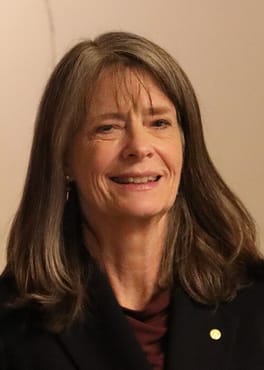
Photo: US Embassy Sweden / CC BY 4.0 (source: Wikimedia Commons)
Born on April 23, 1961, Mary E. Brunkow is from Portland, Oregon, United States. Public records list Mary E. Brunkow as a molecular biologist and immunologist. The age as of 2026 is 65. Schooling on record includes University of Washington.
My Take
Mary E. Brunkow is the kind of figure I think the public underrates and the scientific world reveres. Born in Portland in 1961 and trained at the University of Washington, she helped identify the FOXP3 gene behind the scurfy mouse phenotype, a discovery that became bedrock for modern regulatory T cell biology. That's not flashy fame; it's the slow, patient kind of brilliance that quietly reshapes how we understand the immune system. I find her career genuinely moving, and the 2025 Nobel Prize in Physiology or Medicine, shared with Fred Ramsdell and Shimon Sakaguchi, confirmed what that patient lab work meant for medicine.
This take was written by generative AI, one per person, from publicly reported facts (editorial policy). It is a reading of the record, not reporting.
1. Profile
- Name (English)
- Mary E. Brunkow
- Name (Japanese)
- メアリー・E・ブランコウ
- Reading
- めありー・E・ぶらんこう
- Born
- April 23, 1961 (age 65)
- Origin
- Portland, Oregon, United States
- Occupation
- molecular biologist / immunologist
- Zodiac / Chinese zodiac
- Taurus / Ox
2. Background
- University
- University of Washington
3. Links
4. About this entry
Tags
- Last updated
Facts are limited to publicly available information up to 2024; non-public or unconfirmed items are omitted. English text is machine-assisted (facts translated by Sonnet, "My Take" written by Opus 4.8). The Japanese page is the source of record.
Frequently asked questions
When was Mary E. Brunkow born?
Mary E. Brunkow was born on April 23, 1961 and is 65 years old.
Where is Mary E. Brunkow from?
Mary E. Brunkow is from Portland, Oregon, United States.
What does Mary E. Brunkow do?
Mary E. Brunkow works as molecular biologist, immunologist.
Where did Mary E. Brunkow study?
Mary E. Brunkow attended University of Washington.
More people from the United States → · More people born on April 23 →