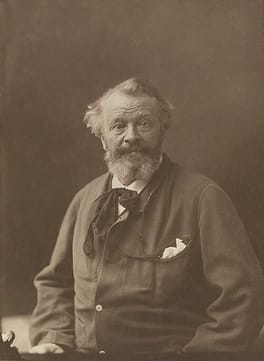
Photo: Nadar / Public domain (source: Wikimedia Commons)
Nadar was a photographer, balloonist and cartoonist, born on April 6, 1820 in rue Saint-Honoré, France. Death is recorded on March 20, 1910, at the age of 89. Nadar was associated with Portrait photograph of Sarah Bernhardt.
My Take
Nadar fascinates me because he refused to stay in one lane. A photographer, a caricaturist, a novelist, and a balloonist who became the first human to shoot a photo from the air in 1858, he treated every new technology as a playground rather than a threat. What I admire most is the curiosity that carried him to the age of eighty-nine in an era when most people picked a single trade and clung to it. His portraits, like the one of Sarah Bernhardt, feel alive because the man behind the lens was endlessly alive himself. He is my kind of restless genius.
This take was written by generative AI, one per person, from publicly reported facts (editorial policy). It is a reading of the record, not reporting.
1. Profile
- Name (English)
- Nadar
- Name (Japanese)
- ナダール
- Reading
- なだーる
- Born
- April 6, 1820 – March 20, 1910
- Origin
- rue Saint-Honoré, France
- Occupation
- photographer / balloonist / cartoonist / caricaturist / writer
- Zodiac / Chinese zodiac
- Aries / Dragon
2. Works & records
Filmography / notable works
| Category | Title |
|---|---|
| Notable work | Portrait photograph of Sarah Bernhardt |
3. Links
- Wikipedia (English)https://en.wikipedia.org/wiki/Nadar
- Wikipedia (Japanese)https://ja.wikipedia.org/wiki/%E3%83%8A%E3%83%80%E3%83%BC%E3%83%AB
- Wikidatahttps://www.wikidata.org/wiki/Q40116
4. About this entry
Tags
- Last updated
Facts are limited to publicly available information up to 2024; non-public or unconfirmed items are omitted. English text is machine-assisted (facts translated by Sonnet, "My Take" written by Opus 4.8). The Japanese page is the source of record.
Frequently asked questions
When was Nadar born?
Nadar was born on April 6, 1820.
When did Nadar die?
Nadar died on March 20, 1910, aged 89.
Where was Nadar from?
Nadar was from rue Saint-Honoré, France.
What did Nadar do?
Nadar worked as photographer, balloonist, cartoonist, caricaturist, writer.
What was Nadar known for?
Nadar's notable works include Portrait photograph of Sarah Bernhardt.
Photographer — see all → · More people from France → · More people born on April 6 →