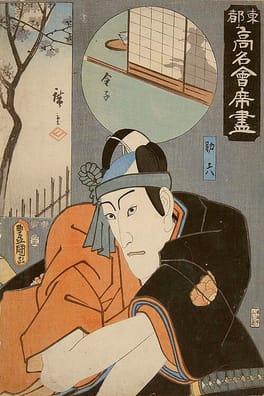
Photo: Utagawa Kunisada / Utagawa Hiroshige / Public domain (source: Wikimedia Commons)
My Take
There's something quietly devastating about Ichikawa Danjuro VIII when you actually sit with the dates — born 1823, gone 1854, not even 31 years old. He carried one of kabuki's most storied names at an age when most performers are still figuring themselves out, stepping onto those Edo stages with the weight of a dynasty on his back. We'll never see a clip, never catch a review from anyone still alive — the man existed entirely before the age of documentation — but that almost makes it more haunting. He burned through the full arc of a stage career in the time it takes some artists to find their voice. He was adored for his beauty and remembered for roles like Yosaburō in Yowa Nasake Ukina no Yokogushi and Togashi in Kanjinchō, and his sudden suicide shocked Edo; I find myself genuinely moved by the idea of someone giving everything to an art form that left no trace beyond the name itself.
This take was written by generative AI, one per person, from publicly reported facts (editorial policy). It is a reading of the record, not reporting.
Overview
Ichikawa Danjūrō VIII was a Kabuki actor born on November 7, 1823, in Edo, Japan, who carried one of the most prestigious hereditary stage names in the Kabuki tradition. He died on September 27, 1854, at approximately thirty years of age, leaving behind a brief but notable career on the Edo stage. His life and art were confined to a period before photographic or recorded documentation, making his legacy known primarily through historical accounts.
1. Profile
- Name (English)
- Ichikawa Danjūrō VIII
- Name (Japanese)
- 八代目 市川團十郎
- Reading
- いちかわ だんじゅうろう
- Born
- November 7, 1823 – September 27, 1854
- Origin
- Edo (present-day Tokyo), Japan
- Occupation
- Kabuki actor
- Zodiac / Chinese zodiac
- Scorpio / Goat
2. Links
3. About this entry
Tags
- Last updated
Only publicly available facts are listed; non-public or unconfirmed items are omitted. Base data was compiled from Wikidata from June 2026 onward; ages are recalculated daily and deaths are checked against Wikidata on an ongoing basis. English text is machine-assisted (facts translated by Sonnet, "My Take" written by Opus 4.8). The Japanese page is the source of record.
Frequently asked questions
When was Ichikawa Danjūrō VIII born?
Ichikawa Danjūrō VIII was born on November 7, 1823.
When did Ichikawa Danjūrō VIII die?
Ichikawa Danjūrō VIII died on September 27, 1854, aged 30.
Where was Ichikawa Danjūrō VIII from?
Ichikawa Danjūrō VIII was from Edo (present-day Tokyo), Japan.
What did Ichikawa Danjūrō VIII do?
Ichikawa Danjūrō VIII worked as Kabuki actor.
Kabuki actor — see all → · More people from Japan → · More people born on November 7 →