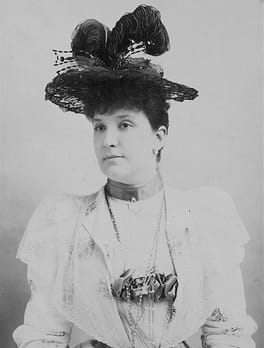
Photo: Numa Blanc Fils (photographic studio) / Public domain (source: Wikimedia Commons)
Nellie Melba, born on May 19, 1861 in Melbourne, Victoria, Australia, was an opera singer, autobiographer and actor. Nellie Melba died on February 23, 1931, aged 69. Education on record includes Presbyterian Ladies' College. Awards on record include Dame Grand Cross of the Order of the British Empire, Victorian Honour Roll of Women (2001) and King's Medal of Merit in Gold (1920).
My Take
What strikes me most about Dame Nellie Melba is the sheer audacity of building a global career from late-Victorian Melbourne, then immortalizing herself by taking her hometown's name as her own. She wasn't just the first Australian classical musician to win international fame; she had the self-possession to write her own life story and to lend her name to dishes still served today. I admire artists who control their own narrative, and Melba did that on and off the stage. Her coloratura may live only in old recordings now, but the legend of a soprano who turned a city into a brand still feels remarkably modern to me.
This take was written by generative AI, one per person, from publicly reported facts (editorial policy). It is a reading of the record, not reporting.
1. Profile
- Name (English)
- Nellie Melba
- Name (Japanese)
- ネリー・メルバ
- Reading
- ねりー・めるば
- Born
- May 19, 1861 – February 23, 1931
- Origin
- Melbourne, Victoria, Australia
- Occupation
- opera singer / autobiographer / singer / actor / musician
- Zodiac / Chinese zodiac
- Taurus / Rooster
2. Background
- University
- Presbyterian Ladies' College
Awards & achievements
- Dame Grand Cross of the Order of the British Empire
- 2001 Victorian Honour Roll of Women
- 1920 King's Medal of Merit in Gold
3. Links
- Wikipedia (English)https://en.wikipedia.org/wiki/Nellie%20Melba
- Wikipedia (Japanese)https://ja.wikipedia.org/wiki/%E3%83%8D%E3%83%AA%E3%83%BC%E3%83%BB%E3%83%A1%E3%83%AB%E3%83%90
- Wikidatahttps://www.wikidata.org/wiki/Q237607
4. About this entry
Tags
- Last updated
Facts are limited to publicly available information up to 2024; non-public or unconfirmed items are omitted. English text is machine-assisted (facts translated by Sonnet, "My Take" written by Opus 4.8). The Japanese page is the source of record.
Frequently asked questions
When was Nellie Melba born?
Nellie Melba was born on May 19, 1861.
When did Nellie Melba die?
Nellie Melba died on February 23, 1931, aged 69.
Where was Nellie Melba from?
Nellie Melba was from Melbourne, Victoria, Australia.
What did Nellie Melba do?
Nellie Melba worked as opera singer, autobiographer, singer, actor, musician.
Where did Nellie Melba study?
Nellie Melba attended Presbyterian Ladies' College.
Opera singer — see all → · Autobiographer — see all → · More people from Australia → · More people born on May 19 →