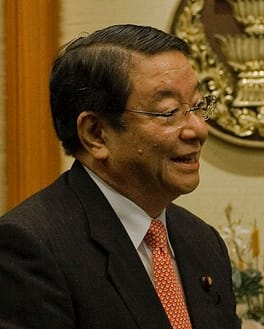
Photo: Thai Government / CC BY 2.0 (source: Wikimedia Commons)
My Take
Born on Culture Day 1949 in Osaka — you have to appreciate the timing, there's something fitting about a future politician arriving on a national holiday. Osamu Fujimura is one of those figures who never dominated the flashy headlines but kept showing up, doing the work, the kind of steady operator the political world quietly runs on. Scorpios in politics are a particular breed: they don't burn bright and burn out, they simmer, and when they move they mean it. He worked for a scholarship fund for children orphaned by traffic accidents before six terms in the Diet and a stint as Noda's Chief Cabinet Secretary, and the profile of a man who came up through postwar Japan, earned his credentials, and built a life in public service carries a kind of weight I genuinely respect.
This take was written by generative AI, one per person, from publicly reported facts (editorial policy). It is a reading of the record, not reporting.
Overview
Osamu Fujimura is a Japanese politician born on November 3, 1949, in Osaka City, Osaka Prefecture. He studied at Hiroshima University before entering public life. He served six terms in the House of Representatives and was Chief Cabinet Secretary under Prime Minister Yoshihiko Noda from 2011 to 2012.
1. Profile
- Name (English)
- Osamu Fujimura
- Name (Japanese)
- 藤村修
- Reading
- ふじむら おさむ
- Born
- November 3, 1949 (age 76)
- Origin
- Osaka City, Osaka Prefecture, Japan
- Occupation
- Politician
- Zodiac / Chinese zodiac
- Scorpio / Ox
2. Background
- University
- Hiroshima University
3. Links
- Wikipedia (Japanese)https://ja.wikipedia.org/wiki/%E8%97%A4%E6%9D%91%E4%BF%AE
- Wikidatahttps://www.wikidata.org/wiki/Q1138023
4. About this entry
Tags
- Last updated
Only publicly available facts are listed; non-public or unconfirmed items are omitted. Base data was compiled from Wikidata from June 2026 onward; ages are recalculated daily and deaths are checked against Wikidata on an ongoing basis. English text is machine-assisted (facts translated by Sonnet, "My Take" written by Opus 4.8). The Japanese page is the source of record.
Frequently asked questions
When was Osamu Fujimura born?
Osamu Fujimura was born on November 3, 1949 and is 76 years old.
Where is Osamu Fujimura from?
Osamu Fujimura is from Osaka City, Osaka Prefecture, Japan.
What does Osamu Fujimura do?
Osamu Fujimura works as Politician.
Where did Osamu Fujimura study?
Osamu Fujimura attended Hiroshima University.
Politician — see all → · More people from Japan → · More people born on November 3 →