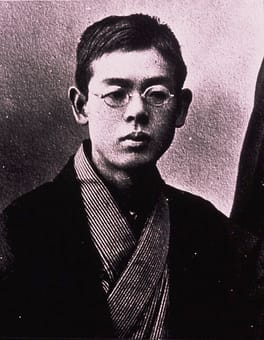
Photo: Unknown author / Public domain (source: Wikimedia Commons)
Rentarō Taki was a pianist and composer. Born on August 24, 1879, Rentarō Taki was from Tokyo, Japan. Death is recorded on June 29, 1903, at the age of 23. The recorded active period was 1896 - 1903.
My Take
Rentarō Taki is one of those figures you encounter and immediately feel a pang of loss for what might have been. Born in 1879 and gone by 1903 at just twenty-three — tuberculosis taking him right as his talent was fully blooming — he still managed to leave Japan some of its most enduring melodies. "Kōjō no Tsuki" alone would have been a career. He trained at the Tokyo Music School, absorbed Western classical forms with serious discipline, and then turned around and used them to capture something distinctly Japanese. There's a bittersweet quality to his music that feels almost self-aware in retrospect, like he somehow knew time was short. A pianist-composer whose whole catalog fits in a few pages yet echoes through Japanese culture well over a century later — that's not a footnote, that's a legacy.
This take was written by generative AI, one per person, from publicly reported facts (editorial policy). It is a reading of the record, not reporting.
1. Profile
- Name (English)
- Rentarō Taki
- Name (Japanese)
- 瀧廉太郎
- Reading
- たき れんたろう
- Born
- August 24, 1879 – June 29, 1903
- Origin
- Tokyo, Japan
- Occupation
- pianist / composer
- Zodiac / Chinese zodiac
- Virgo / Rabbit
- Active years
- 1896 - 1903
2. Works & records
Works summary
- Works
- 54
- By year (titles with a known year)
- 1952: 1, 1960: 1, 1967: 1, 1970: 2, 1990: 1, 1991: 1, 1993: 1, 1998: 1, 2002: 1, 2012: 3, 2013: 1, 2014: 2, 2016: 1, year unknown: 37
Filmography / notable works
| Category | Title | Year |
|---|---|---|
| Featured work | 瀧廉太郎の友人、と知人とその他の諸々 | 2016 |
| Featured work | コンダーさんの恋 鹿鳴館騒動記 | 2014 |
| Featured work | 音楽劇 瀧廉太郎物語 | 2014 |
| Featured work | 絶筆〜LAST MUSIC | 2013 |
| Featured work | 音楽劇 荒城の月〜落日の譜〜《A組公演》 | 2012 |
| Featured work | 音楽劇 荒城の月〜落日の譜〜《B組公演》 | 2012 |
| Featured work | 春うらら | 2012 |
| Featured work | ミュージカル 花・滝廉太郎 | 2002 |
| Featured work | オペラ 瀧廉太郎 | 1998 |
| Featured work | Bloom in the Moonlight | 1993 |
| Featured work | 花-滝廉太郎物語 | 1991 |
| Featured work | 荒城の月 | 1990 |
| Featured work | 日本の騎士 | 1970 |
| Featured work | 日本の旋律 荒城の月 | 1970 |
| Featured work | Falling Blossoms | 1967 |
| Featured work | テレビ偉人伝 滝廉太郎 | 1960 |
| Featured work | 忘れえぬ人々 滝廉太郎 | 1952 |
| Work | 日本男児 | |
| Work | 春の海 | |
| Work | 散歩 | |
| Work | 命を捨てて | |
| Work | 我神州 | |
| Work | 四季の瀧 | |
| Work | 卒業式歌 | |
| Work | メヌエット | |
| Work | 四季 | |
| Work | 花 | |
| Work | 納涼 | |
| Work | 月 | |
| Work | 雪 | |
| Work | 中学唱歌 | |
| Work | 箱根八里 | |
| Work | 豊太閤 | |
| Work | 幼稚園唱歌 | |
| Work | ほうほけきょ | |
| Work | ひばりはうたひ | |
| Work | 鯉幟 | |
| Work | 海のうへ | |
| Work | 桃太郎 | |
| Work | お池の蛙 | |
| Work | 夕立 | |
| Work | かちかち山 | |
| Work | みずあそび | |
| Work | 鳩ぽっぽ | |
| Work | 菊 | |
| Work | 軍ごっこ | |
| Work | 雀 | |
| Work | 雪やこんこん | |
| Work | お正月 | |
| Work | さようなら | |
| Work | 別れの歌 | |
| Work | 水のゆくへ | |
| Work | 荒磯の波 | |
| Work | 憾 |
3. Links
- Wikipedia (English)https://en.wikipedia.org/wiki/Rentar%C5%8D%20Taki
- Wikipedia (Japanese)https://ja.wikipedia.org/wiki/%E7%80%A7%E5%BB%89%E5%A4%AA%E9%83%8E
- Wikidatahttps://www.wikidata.org/wiki/Q717957
4. About this entry
Tags
- Last updated
Only publicly available facts are listed; non-public or unconfirmed items are omitted. Base data was compiled from Wikidata from June 2026 onward; ages are recalculated daily and deaths are checked against Wikidata on an ongoing basis. Works and profile fields sourced from Wikipedia reflect content as of 2026-08-26. English text is machine-assisted (facts translated by Sonnet, "My Take" written by Opus 4.8). The Japanese page is the source of record.
Frequently asked questions
When was Rentarō Taki born?
Rentarō Taki was born on August 24, 1879.
When did Rentarō Taki die?
Rentarō Taki died on June 29, 1903, aged 23.
Where was Rentarō Taki from?
Rentarō Taki was from Tokyo, Japan.
What did Rentarō Taki do?
Rentarō Taki worked as pianist, composer.
When was Rentarō Taki active?
Rentarō Taki was active from 1896 to 1903.
Pianist — see all → · Composer — see all → · More people from Japan → · More people born on August 24 →