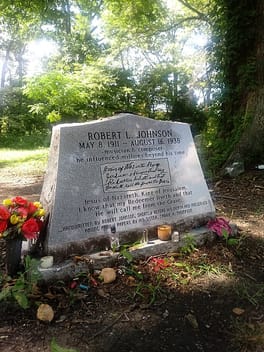
Photo: OGItaly / Public domain (source: Wikimedia Commons)
Robert Johnson, born on May 8, 1911 in Hazlehurst, Mississippi, United States, was a guitarist, blues singer and singer-songwriter. Robert Johnson died on August 16, 1938 at the age of 27. Listed accolades include Grammy Lifetime Achievement Award (2006) and Rock and Roll Hall of Fame (1986).
My Take
Robert Johnson recorded for barely two years, died at twenty-seven, and left behind a handful of sides and even fewer photographs — yet rock and roll as we know it is unimaginable without him. The crossroads legend amuses me less than what it conceals: a young man from Hazlehurst, Mississippi who practiced his way into sounding supernatural. Listen past the surface noise of those 1936-37 recordings and you hear a complete musical architecture — bass line, rhythm, and lead from one guitar and one voice. The Grammy honors and Hall of Fame inductions came decades too late, of course. Real influence does not wait for permission, and his never did.
This take was written by generative AI, one per person, from publicly reported facts (editorial policy). It is a reading of the record, not reporting.
1. Profile
- Name (English)
- Robert Johnson
- Name (Japanese)
- ロバート・ジョンソン
- Reading
- ろばーと・じょんそん
- Born
- May 8, 1911 – August 16, 1938
- Origin
- Hazlehurst, Mississippi, United States
- Occupation
- guitarist / blues singer / singer-songwriter / street artist / composer
- Zodiac / Chinese zodiac
- Taurus / Boar
2. Background
Awards & achievements
- 2006 Grammy Lifetime Achievement Award
- 1986 Rock and Roll Hall of Fame
3. Links
4. About this entry
Tags
- Last updated
Facts are limited to publicly available information up to 2024; non-public or unconfirmed items are omitted. English text is machine-assisted (facts translated by Sonnet, "My Take" written by Opus 4.8). The Japanese page is the source of record.
Frequently asked questions
When was Robert Johnson born?
Born May 8, 1911.
When did Robert Johnson die?
Died August 16, 1938, aged 27.
Where was Robert Johnson from?
Robert Johnson was from Hazlehurst, Mississippi, United States.
What did Robert Johnson do?
Robert Johnson worked as guitarist, blues singer, singer-songwriter, street artist, composer.
Guitarist — see all → · More people from the United States →